IATR Took Center Stage in Nashville Last Year & Moves to Las Vegas for 2026!
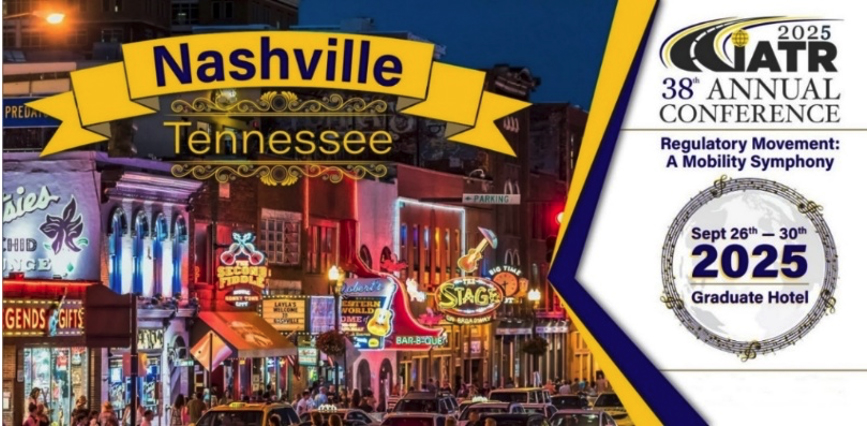
The International Association of Transportation Regulators (IATR) held its 38th Annual Conference in Nashville, Tennessee, from September 26-30, 2025. The conference’s theme was “Regulatory Movement: A Mobility Symphony.” It covered topics like enforcement, insurance reform, and innovation.
As always, the IATR Annual Conference surpassed expectations, with a program that reflected the most pressing challenges and opportunities facing transportation regulators today. Highlights included forward-looking keynote speeches, in-depth sessions on automated vehicles, insurance reform, congestion mitigation, sustainability, big-event mobility, and transit–for-hire partnerships, as well as candid exchanges between regulators, industry leaders, and advocates. The conference combined policy dialogue, regulatory insights, and networking, reinforcing IATR’s role as the global forum for shaping the future of regulated mobility.
Save the Date: IATR’s 39th Annual Conference will take place September 14–17, 2026, at the Vdara Hotel in Las Vegas, Nevada. Please mark your calendar and visit https://iatr.global/ for additional information and upcoming announcements.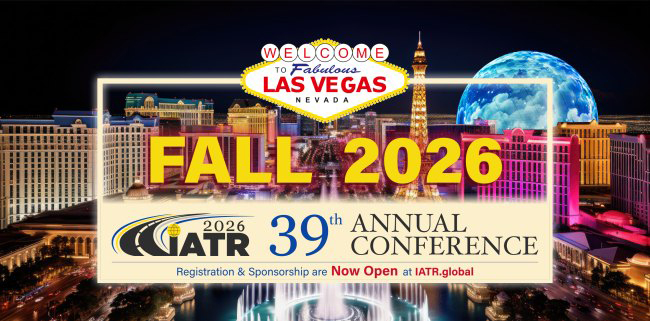
This conference would not have been possible without the invaluable support of our sponsors: Windels Marx, CUNY – University Transportation Research Center, Flywheel, Uber, Voyager Global Mobility, Coco Robotics, Curb Mobility, Research Underwriters, Corporate Transportation Group (CTG), SAVE-US, The Black Car Fund, UZURV, SilverRide, ONO, Independent Drivers Guild (IDG), ZOOX, Nivel Risk, Together for Safer Roads, Waymo, zTrip, Agape Transport, Via, and Modivcare. Additionally, gala transportation was provided by Gray Line Tennessee.
The conference planning team did an outstanding job. I want to give a special shout-out to our executive director, Kim Ramkishun; our membership director, Eric Richardson; our videographer/photographer, Andriy Blagay; our conference planner, Bianca Blag (https://biancab.com/), and her team members, Jairina Capellan and Ava King.
Keynote Speakers
In her welcoming remarks, Diana Alarcon, Director of the Nashville Department of Transportation & Multimodal Infrastructure (NDOT), greeted attendees and highlighted the city’s rapid growth, record tourism, and expanding downtown and midtown areas as drivers for bold transportation investment, pointing to the voter-approved “Choose How You Move” referendum as a catalyst for building out a safer, more efficient, people-focused mobility system. She underscored Nashville’s Vision Zero commitment and recent safety gains, encouraged responsible travel while enjoying the city, and closed with a lighthearted, interactive quiz that blended local history with practical transportation tips.
From Left: Diana Alarcon, Director of the Nashville Department of Transportation & Multimodal Infrastructure; Freddie O’Connell, Mayor of Nashville; and Sabrina Sussman, Chief Program Officer for Choose How You Move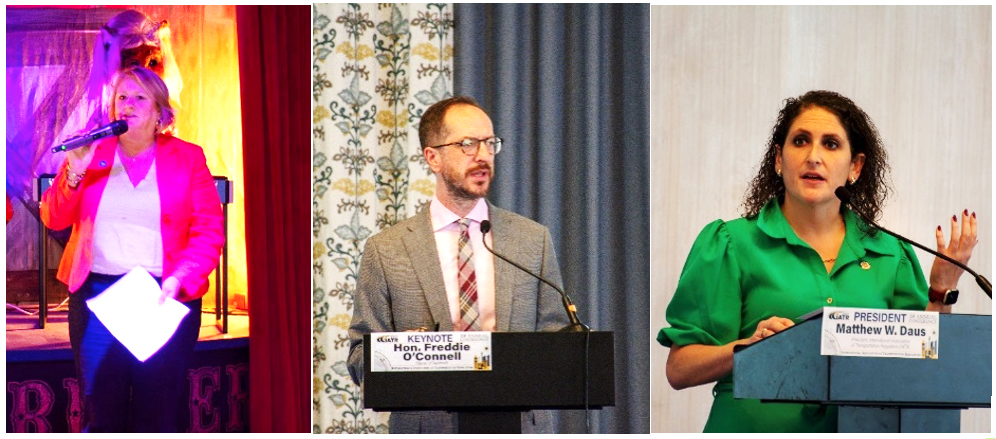
In his keynote address, Nashville Mayor Freddie O’Connell outlined a vision for managing the city’s rapid growth through a people-centered, multimodal transportation policy. He emphasized the importance of giving residents real choices in how they move, linking safety, accessibility, sustainability, and economic vitality. He also highlighted the Choose How You Move initiative as a mandate to invest boldly in transit, walking, biking, and street safety. Mayor O’Connell framed transportation as infrastructure, as well as a core quality-of-life and equity issue, underscoring the city’s commitment to Vision Zero, climate responsibility, and collaborative governance as Nashville continues to grow.
In her keynote, Sabrina Sussman, Chief Program Officer for Choose How You Move, provided a detailed look at how Nashville is translating voter intent into a long-term, implementable mobility strategy. She outlined the program’s origins, governance structure, and funding framework, emphasizing accountability, transparency, and phased delivery across transit, safety, and multimodal investments. Framing Choose How You Move as both a growth-management and quality-of-life initiative, Sabrina highlighted the importance of community trust, measurable outcomes, and sustained political leadership as Nashville works to build a safer, more connected transportation system for decades to come.
IATR Awards
Regulator of the Year Award
The 2025 Regulator of the Year Award went to Sean Bouffiou, Administrative Services Manager at King County. For more than 30 years, Sean has served King County, Washington, with dedication, vision, and integrity – most recently as the For-Hire and Shared Transportation Services Manager within the Department of Records and Licensing Services. Over the past decade, Sean has become a driving force behind nearly every major policy and project shaping King County’s for-hire transportation landscape.
From Left: John Megow, Deputy Director of Operations and Enforcement at the City of Seattle; Matt Daus, President of the IATR; Cregan Newhouse, Manager of the Consumer Protection Division at the City of Seattle; Sean Bouffiou, Administrative Services Manager at King County; Eddie Cantu, Licensing Manager at King County; Damien Johnson, Licenses and Standards Supervisor at the City of Seattle; and Carlton Thomas, IATR Board Chair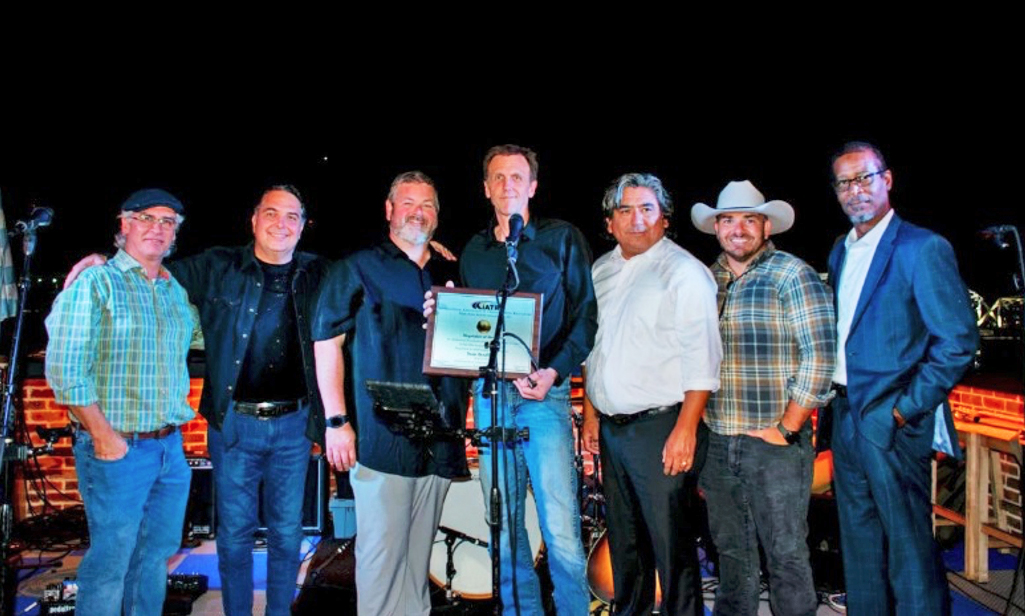
From introducing TNC regulations to launching new licensing and permitting technology, Sean has modernized how the County serves customers and manages critical transportation data. He led a comprehensive overhaul of taxi regulations in 2023, simplifying compliance, removing barriers to competition, and aligning oversight with emerging technology. Under his leadership, King County also implemented a human trafficking prevention training requirement in 2024.
Sean’s influence continues with two major ongoing initiatives: the joint King County-City of Seattle centralized dispatch project for wheelchair-accessible vehicles, and the promotion of open-source data standards to improve coordination in shared mobility and on-demand transportation.
Beyond regulation, Sean has strengthened King County’s partnerships through interlocal agreements with 16 municipalities and the Port of Seattle, overseeing operations at SEATAC Airport, and managing the County’s co-regulatory relationship with the City of Seattle. Sean also volunteered to develop and launch King County’s first scooter share pilot program in 2020.
Whether analyzing fee structures for fairness, evaluating technology platforms, or shaping long-term mobility strategy, Sean brings strategic vision and hands-on expertise to his work. His career exemplifies public service at its best, balancing policy leadership, operational excellence, and collaboration to move King County’s mobility ecosystem forward.
Norma Reyes Scholarship
The IATR established the Norma Reyes Scholarship in 2013 in memory of the late former Commissioner of the Chicago Department of Business Affairs and Consumer Protection (BACP). As an active member of the IATR, an accomplished lawyer, and a public servant, Norma left her mark on the world and her IATR friends and colleagues. The Norma Reyes Scholarship provides regulators who are new to IATR an opportunity to participate in our annual conference.
Senikavika Jiuta, Chief Executive Officer of the Fijian Competition & Consumer Commission (Left); and Edson Hugo Romero Ponce, Transportation Regulator at the Dirección General de Transporte del Estado de Guanajuato (Right), receiving their awards from Carlton Thomas, IATR Board Chair; and Matt Daus, IATR President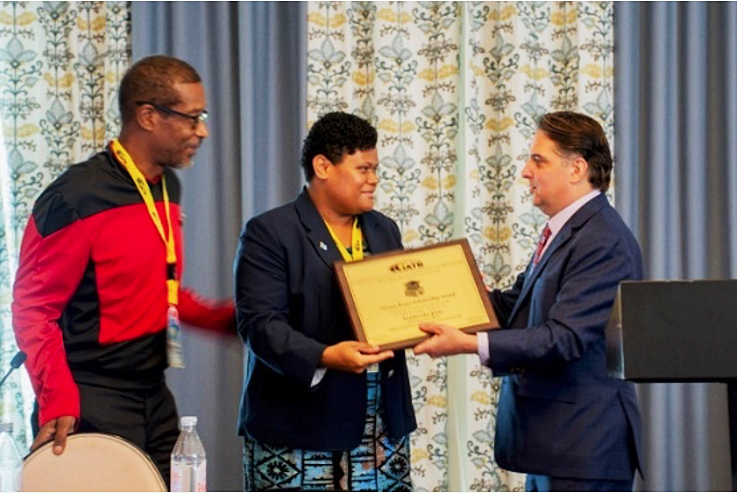
Senikavika Jiuta, Chief Executive Officer of the Fijian Competition & Consumer Commission (Left); and Edson Hugo Romero Ponce, Transportation Regulator at the Dirección General de Transporte del Estado de Guanajuato (Right), receiving their awards from Carlton Thomas, IATR Board Chair; and Matt Daus, IATR President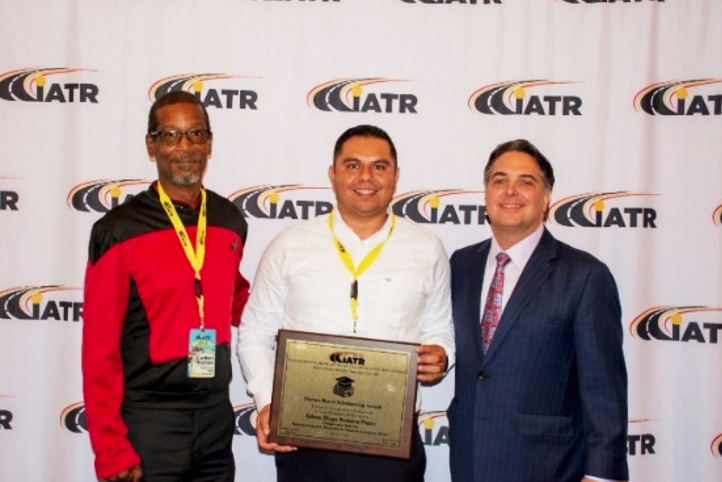
Two outstanding leaders were recognized as this year’s Norma Reyes Scholarship recipients: Senikavika Jiuta, Chief Executive Officer of the Fijian Competition & Consumer Commission, and Edson Hugo Romero Ponce, Transportation Regulator at the Dirección General de Transporte del Estado de Guanajuato. We proudly congratulate the 2025 recipients and look forward to their ongoing contributions in shaping the future of mobility regulation!
Public Service Award
The IATR proudly recognized Richard Rooker, Transportation Licensing Director, and Diana Alarcon, Director, both of the Nashville Department of Transportation and Multimodal Infrastructure (NDOT), with this year’s Public Service Award.
– From Left: Kim Ramkishun, Executive Director of the IATR; Matt Daus, President of the IATR; Richard Rooker, Transportation Licensing Director at the Nashville Department of Transportation and Multimodal Infrastructure (NDOT); Diana Alarcon, Director of the NDOT; and Carlton Thomas, IATR Board Chair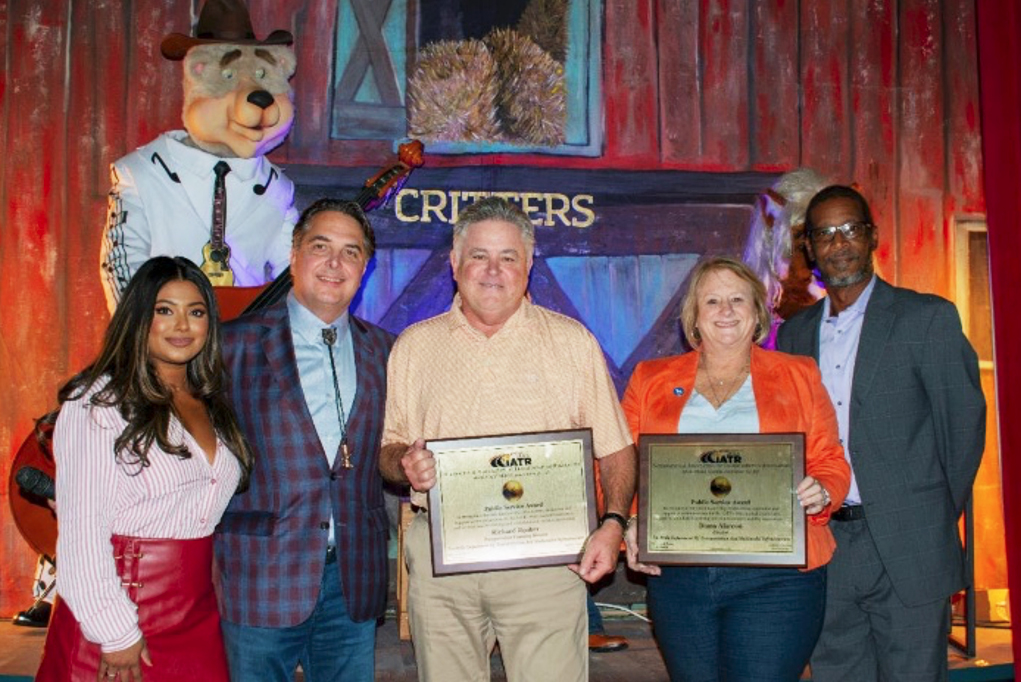
Richard and Diana were honored for their leadership, dedication, and support as conference hosts for IATR’s 38th Annual Meeting. Their tireless commitment to mobility innovation and public service helped make our time in Nashville memorable and impactful.
On behalf of IATR’s members and global network of regulators, we extend our deepest thanks to Richard, Diana, and the entire NDOT team for welcoming us to Nashville and showcasing the city’s leadership in multimodal transportation.
Driver of the Year Award
The 2025 Driver of the Year Award was presented to Mary Jones, Senior Driver with Grove Transit. Mary was introduced by Dan Reid, President of Grove Transit and President of The Transportation Alliance, who commended her professionalism, compassion, and unwavering commitment to delivering safe, dependable transportation to every passenger she serves.
From Left: Mary Jones, Senior Driver with Grove Transit; Dan Reid, President of Grove Transit and President of The Transportation Alliance; and Matt Daus, President of the IATR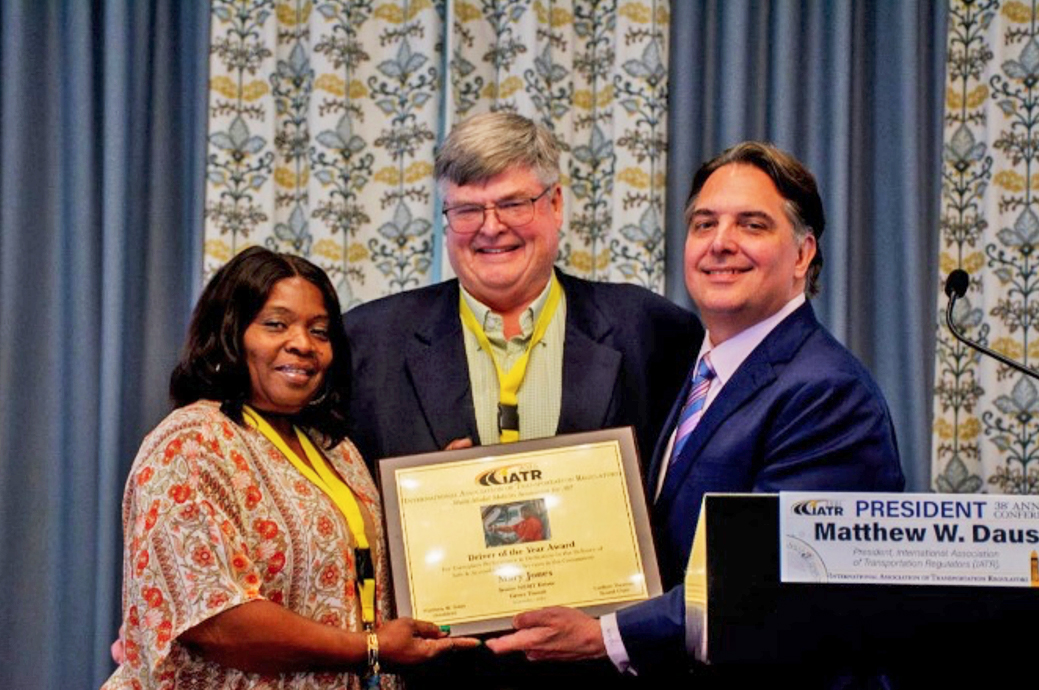
With many years of dedicated service, Mary has set a shining example of courtesy, safety, and community connection. Her dedication to helping passengers, particularly seniors and individuals with mobility challenges, exemplifies the best of the industry and the public service mission shared by transportation professionals worldwide.
Recognizing IATR Leadership
IATR President Matt Daus recognized two exceptional members whose leadership and dedication have strengthened the organization and the global regulatory community – Kim Ramkishun and Eric Richardson.
From Left: Berj Haroutunian, Executive Chair of The Black Car Fund; Eric Richardson, Membership Director and Co-Chair of the Health and Safety Committee of the IATR; Matt Daus, President of the IATR; Kim Ramkishun, Executive Director of the IATR; and Ira Goldstein, Executive Director of The Black Car Fund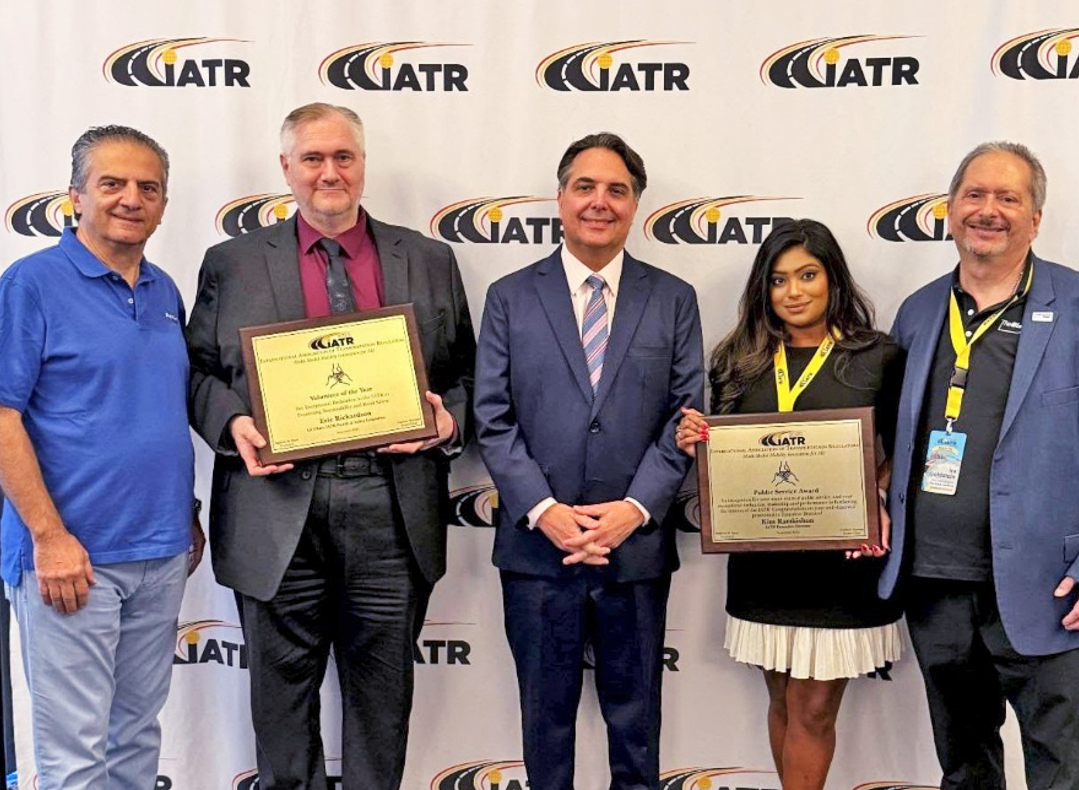
Kim Ramkishun was promoted by the IATR president from Membership Director to Executive Director, and received a Public Service Award for her outstanding leadership, commitment, and service to the association and its worldwide network of regulators. Kim’s tireless work in organizing IATR’s programs, coordinating events, managing partnerships, and fostering collaboration across jurisdictions has left an enduring mark on the organization and the broader mobility sector.
Eric Richardson, Co-Chair of the IATR’s Health and Safety Committee, was appointed by Matt Daus as the new Membership Director of IATR. Matt also presented Eric with the IATR’s Volunteer of the Year Award for his ongoing efforts to advance safety, innovation, and professional development in transportation regulation. His leadership in expanding IATR’s membership and strengthening connections among regulators worldwide reflects the association’s core values of collaboration, integrity, and service.
Congratulations to Kim and Eric on their well-deserved recognition and lasting contributions to IATR’s mission to promote safe, equitable, and forward-thinking transportation regulation!
8th Annual Bootcamp
Bootcamp Session 101: Traditional Enforcement
The first Bootcamp session this year focused on the basics of traditional field enforcement. The session was facilitated by Juan Martinez, Chair of the New York City Bar Transportation Committee, and Eric Richardson, Membership Director and Co-Chair of the Health and Safety Committee of the IATR. The session featured James Button, President of the Institute of Licensing; Daniel Stritzel, Enforcement Agent at the St. Louis Metropolitan Taxicab Commission; Tyson Taylor, License Inspector Supervisor at King County; Anthony Bianco, Philadelphia Motor Carrier Enforcement Manager at the Pennsylvania Public Utility Commission; and Richard Rooker, Transportation Licensing Director at the Nashville Department of Transportation & Multimodal Infrastructure.
From Left: Eric Richardson, Membership Director and Co-Chair of the Health and Safety Committee of the IATR; Anthony Bianco, Philadelphia Motor Carrier Enforcement Manager at the Pennsylvania Public Utility Commission; Tyson Taylor, License Inspector Supervisor at King County; James Button, President of the Institute of Licensing; Kim Ramkishun, Executive Director of the IATR; Daniel Stritzel, Enforcement Agent at the St. Louis Metropolitan Taxicab Commission; Richard Rooker, Transportation Licensing Director at the Nashville Department of Transportation & Multimodal Infrastructure; and Juan Martinez, Chair of the New York City Bar Transportation Committee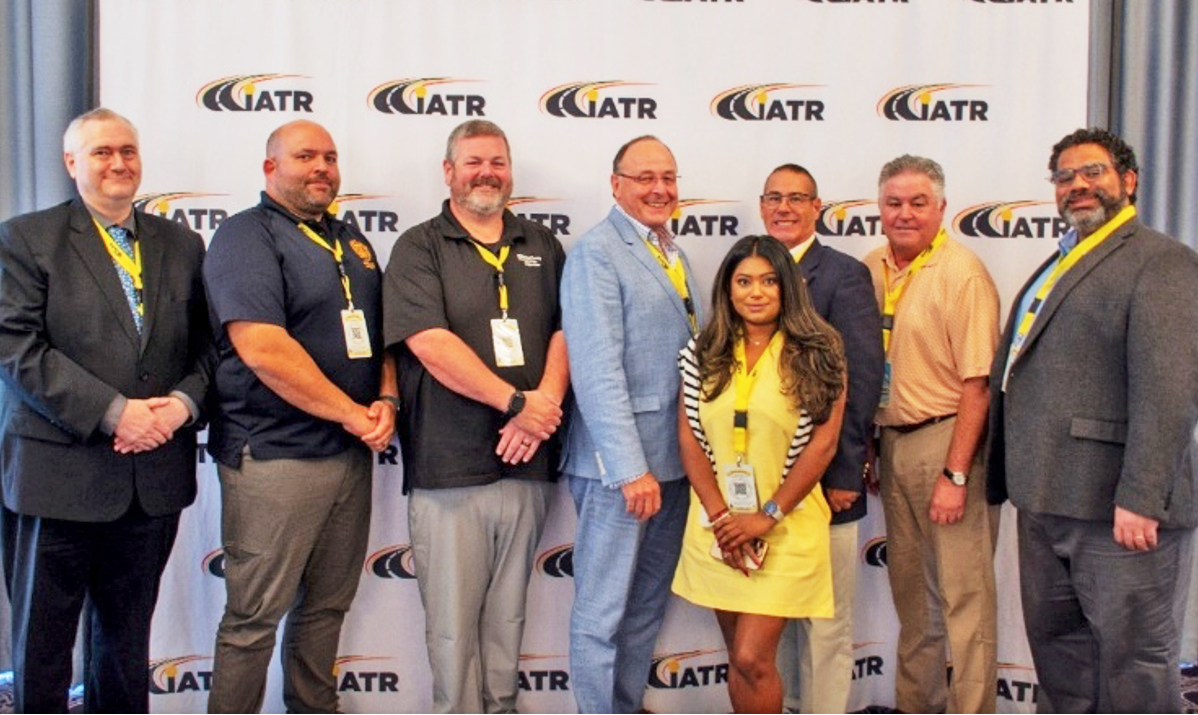
Speakers examined how cities and regulators are adapting their licensing, enforcement, and compliance frameworks to keep pace with increasingly complex, multimodal transportation ecosystems. They discussed the operational challenges of overseeing taxis, TNCs, for-hire vehicles, and emerging mobility services across jurisdictions, emphasizing the need for clear authority, data sharing, and interagency coordination. They highlighted common enforcement issues, including illegal operations, safety risks, curb management, and capacity constraints, and shared practical approaches to inspections, technology use, and workforce training.
Combating Illegal and Unlicensed For-Hire Drivers Report & Overview
Matt Daus, President of the IATR, delivered an overview of the Addressing Unlicensed & Illegal Ride Hailing in the NY/NJ Metro Region report. Matt authored this report with the University Transportation Research Center at the City College of New York (UTRC) in collaboration with the Chauffeured Transportation Association of New Jersey (CTANJ) and the Black Car Assistance Corporation (BCAC). The report focuses on unauthorized taxis, limousines, and off-platform rideshare drivers. It identifies the risks they pose, the regulatory gaps they exploit, and the enforcement challenges confronting state and local authorities.
Unlicensed services often operate through illegal street hails or unauthorized pickups in high-demand areas like airports, nightlife zones, and event venues. Passengers may unknowingly ride with drivers who lack background checks, insurance, or vehicle inspections, leaving them vulnerable in the event of an accident.
Unlicensed operators also undercut licensed drivers and operations by avoiding taxes, fees, and safety regulations. Illegal operations persist for several reasons: barriers to lawful entry into the industry, low enforcement levels, limited public awareness, and the ease of online advertising on platforms like Facebook, Craigslist, and Yelp. Many enforcement agencies lack the resources, personnel, or legal tools to keep up with the scale of the problem, especially as illegal operators adopt increasingly sophisticated tactics.
The report calls for a comprehensive crackdown on unlicensed and illegal for-hire transportation by strengthening regulatory authority, expanding civil and criminal penalties, and modernizing enforcement tools. It emphasizes targeted, data-driven enforcement at high-risk locations and peak times; prohibiting the advertising and facilitation of illegal services online; and holding both drivers and unlicensed base operators accountable, including licensed drivers who accept off-platform trips. The strategy combines geofencing, license plate readers, electronic trip records, and real-time public reporting tools, along with partnerships among regulators, port authorities, TNCs, and industry groups, to improve detection, intelligence sharing, and compliance. At the same time, it recognizes the need to reduce unnecessary licensing barriers that push drivers underground, promote public awareness and frontline training to protect riders, and advance legislative reforms that create clear, enforceable, and fair pathways for legal operation.
Bootcamp Session 102: Technology & Innovations in Enforcement
The second Bootcamp session covered key technological and policy advancements in enforcement. This session was also facilitated by Juan Martinez, Chair of the New York City Bar Transportation Committee, and Former General Counsel of Transportation Alternatives, and Eric Richardson, Membership Director and Co-Chair of the Health and Safety Committee of the IATR. The session featured Izzy Aala, CEO of Flywheel Technologies; Michelle Hoang, For-Hire and Shared Transportation Program Analyst at King County; Jarvis Murray, Commercial Rideshare and Mobility Administrator at the Los Angeles Department of Transportation (LADOT) & Chair of IATR’s Technology and Innovation Committee; and Abdul Rafih, Coordinator at the Department of Mobility, Parking Safety & Compliance Services at the City of Calgary.
From Left: Juan Martinez, Chair of the New York City Bar Transportation Committee; Izzy Aala, CEO of Flywheel Technologies; Abdul Rafih, Coordinator at the Department of Mobility, Parking Safety & Compliance Services at the City of Calgary; Michelle Hoang, For-Hire and Shared Transportation Program Analyst at King County; Jarvis Murray, Commercial Rideshare and Mobility Administrator at the Los Angeles Department of Transportation (LADOT) & Chair of IATR’s Technology and Innovation Committee; and Eric Richardson, Membership Director and Co-Chair of the Health and Safety Committee of the IATR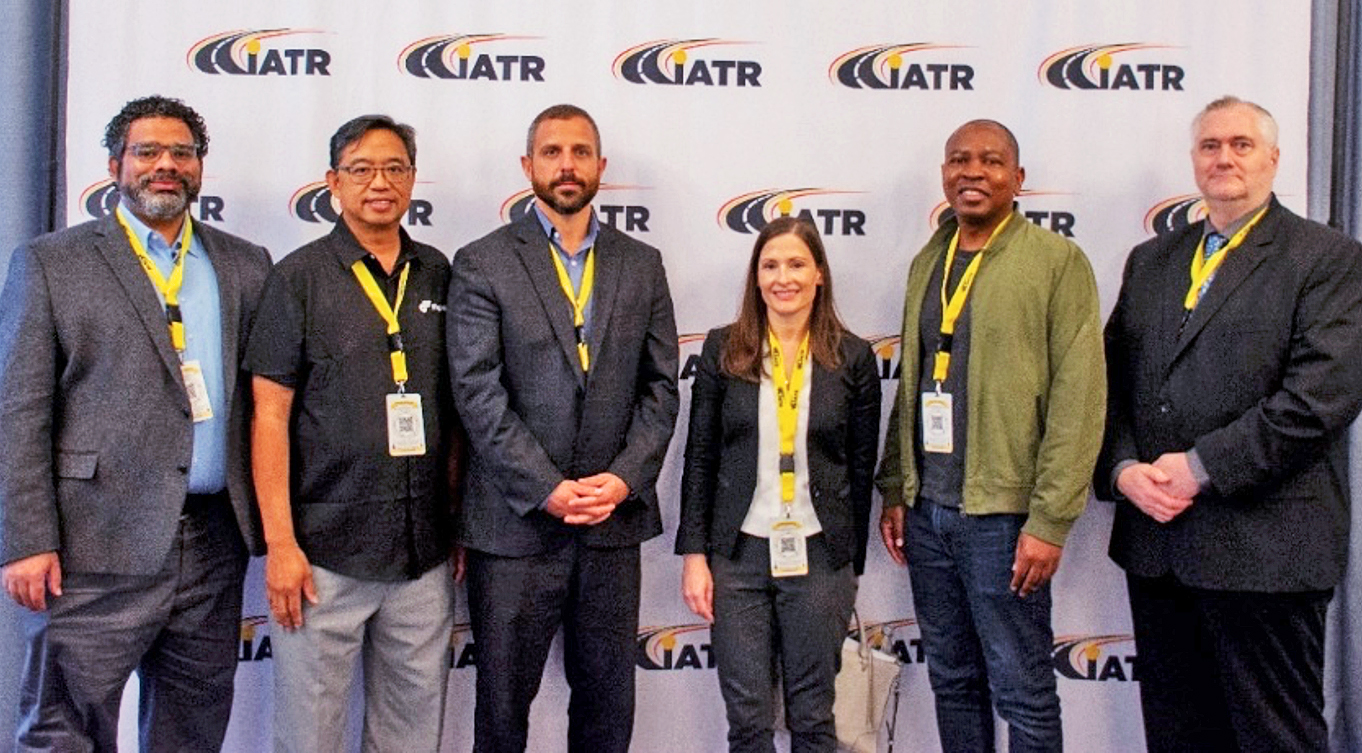
Speakers examined how automated enforcement, in-vehicle technology, and real-time data can improve safety, compliance, and equity in urban mobility, while also highlighting the risks of poorly designed systems. Speakers discussed evidence that automated enforcement (e.g., speed, parking, and LPR cameras) changes behavior when it is consistent, transparent, and tied to clear safety goals rather than revenue generation, emphasizing the need for strong human review, fair and accessible appeals processes, and careful legislative design. Case studies from Calgary and Los Angeles showed how data platforms and geofencing can enable large-scale, efficient enforcement and curb management, while private-sector perspectives highlighted the growing role of AI-enabled in-vehicle cameras as “guardian angels” for drivers, supporting real-time warnings, coaching, insurance risk reduction, and potential citywide situational awareness. Speakers also underscored proactive regulatory approaches, including King County’s human-trafficking training for for-hire drivers, and concluded with a robust discussion on affordability, discretion, crowdsourcing concerns, and the importance of aligning technology, policy, and community trust to ensure these tools enhance safety without unfairly burdening drivers.
International Regulator “Star Trek”
The International Regulator Spotlight, one of IATR’s most popular panels and creatively inspired by Star Trek, once again brought together “regulatory stars” from around the world to share innovative policies and programs shaping the future of mobility. This year’s session was moderated by Carlton Thomas, Board Chair of the IATR, and featured: Sean Bouffiou, For-Hire and Shared Transportation Services Manager at the King County Records and Licensing Services; Goh Puay San, Deputy Group Director of the Public Transport Division at Singapore’s Land Transport Authority and Dean of the Singapore Bus Academy; Edson Hugo Romero Ponce, Transportation Regulator at the Dirección General de Transporte del Estado de Guanajuato; Sylvain Tousignant, Director of Business Strategies at Montréal’s Agence de mobilité durable and Co-Chair of IATR’s Canadian Regulator Committee; and Senikavika Jiuta, Chief Executive Officer of the Fijian Competition and Consumer Commission. The panel highlighted cutting-edge regulatory approaches from North America, Asia, Latin America, and the Pacific.
From Left: Matt Daus, President of the IATR; Senikavika Jiuta, Chief Executive Officer of the Fijian Competition and Consumer Commission; Goh Puay San, Deputy Group Director of the Public Transport Division at Singapore’s Land Transport Authority and Dean of the Singapore Bus Academy; Carlton Thomas, Board Chair of the IATR; Edson Hugo Romero Ponce, Transportation Regulator at the Dirección General de Transporte del Estado de Guanajuato; Sean Bouffiou, For-Hire and Shared Transportation Services Manager at the King County Records and Licensing Services; and Sylvain Tousignant, Director of Business Strategies at Montréal’s Agence de mobilité durable and Co-Chair of IATR’s Canadian Regulator Committee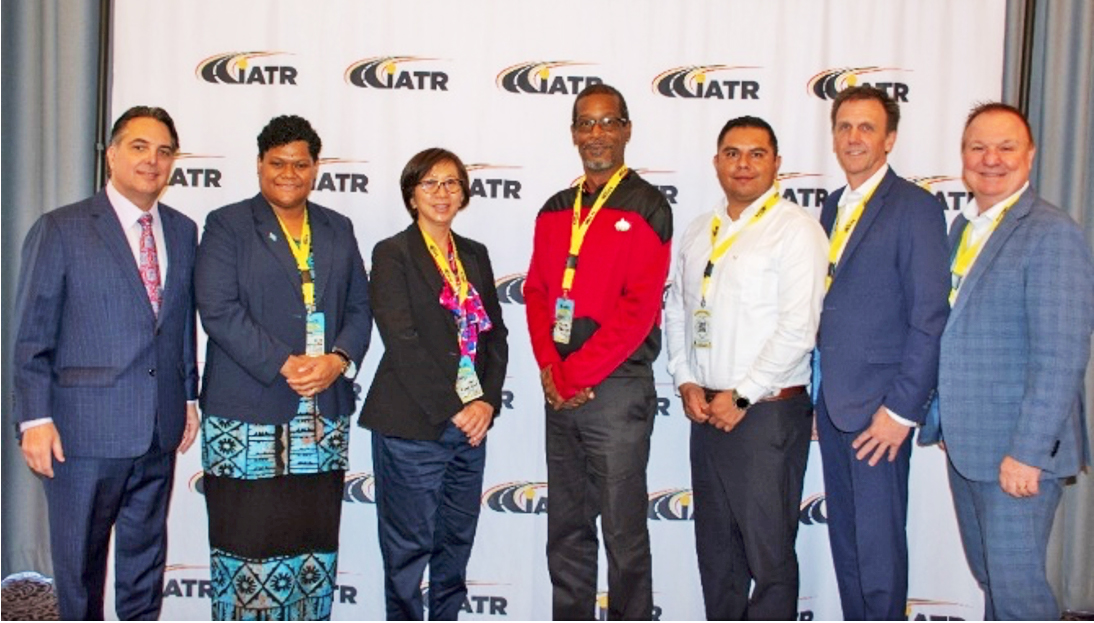
Carlton Thomas opened the panel by framing the International Regulator Spotlight as a forum for sharing practical regulatory innovation across jurisdictions. He emphasized the value of international collaboration through IATR, noting that regulators often face similar challenges despite operating in very different legal, cultural, and market contexts.
Sean Bouffiou discussed King County’s approach to regulating for-hire and shared transportation services, with a focus on proactive compliance, data-driven oversight, and driver education. He highlighted the County’s efforts to modernize licensing and enforcement processes, strengthen coordination with regional partners, and ensure regulatory frameworks keep pace with changing service models. Sean emphasized balancing consumer protection and safety with operational flexibility for providers.
Goh Puay San outlined Singapore’s integrated public transport governance model, in which taxis and private-hire vehicles serve as complementary services to a robust mass transit system. She described the Land Transport Authority’s centralized role in planning, regulating, and managing all transport modes, including the use of vehicle quotas, licensing controls, and digital vocational credentials to manage congestion and safety. Goh also highlighted Singapore’s emphasis on workforce development through the Singapore Bus Academy and the use of data and technology to support enforcement, service quality, and long-term sustainability goals.
Edson Hugo Romero Ponce shared insights from the State of Guanajuato on regulating transportation services in a rapidly growing and diverse regional market. He discussed efforts to strengthen regulatory capacity, improve oversight of for-hire services, and adapt frameworks to accommodate evolving mobility needs while maintaining safety and consumer protections. Edson emphasized the importance of aligning state-level regulation with local conditions and fostering collaboration among agencies to ensure effective implementation.
Sylvain Tousignant highlighted Montréal’s leadership in on-demand mobility regulation, including the city’s transition to a more integrated and tech-enabled oversight model. He discussed the development of centralized tools, such as taxi registries and data systems, that support enforcement, planning, and the integration of public transit services. Sylvain emphasized Montréal’s focus on fairness, transparency, and modernization, as well as the role of Canadian regulators in sharing best practices through IATR’s Canadian Regulators Committee.
Senikavika Jiuta discussed Fiji’s regulatory landscape from a competition and consumer protection perspective, emphasizing the importance of fair market practices, affordability, and public trust in transportation services. She highlighted the challenges of regulating mobility services in smaller and island jurisdictions, where market scale, resources, and geographic constraints require adaptable regulatory approaches.
The Taxi & For-Hire Insurance Crisis: What Can Mobility Regulators Do to Help the Industry?
The Taxi & For-Hire Insurance Crisis: What Can Mobility Regulators Do to Help the Industry? convened regulators, insurance professionals, and industry leaders to examine the escalating insurance challenges facing the for-hire sector in the U.S. and internationally. Moderated by Matt Daus, President of the IATR, the session featured: Wilson Rosa, Co-Founder and CEO of Nivel Risk; Andrew Don, President of Research Underwriters; Josh Gold, Senior Director of Public Policy & Communications at Uber; Jeremy Moskowitz, Executive Vice President of Voyager Global Mobility; Daniel Maher, Management Consultant at the Excess Line Association of New York (ELANY); and Renee Rogers, Founder and CEO of ONO App. The panel explored near-term relief and longer-term reforms, from fraud prevention and underwriting standards to telematics, alternative risk models, and workforce protections.
From Left: Josh Gold, Senior Director of Public Policy & Communications at Uber; Matt Daus, President of the IATR; Andrew Don, President of Research Underwriters; Renee Rogers, Founder and CEO of ONO App; Wilson Rosa, Co-Founder and CEO of Nivel Risk; Jeremy Moskowitz, Executive Vice President of Voyager Global Mobility; and Daniel Maher, Management Consultant at the Excess Line Association of New York (ELANY)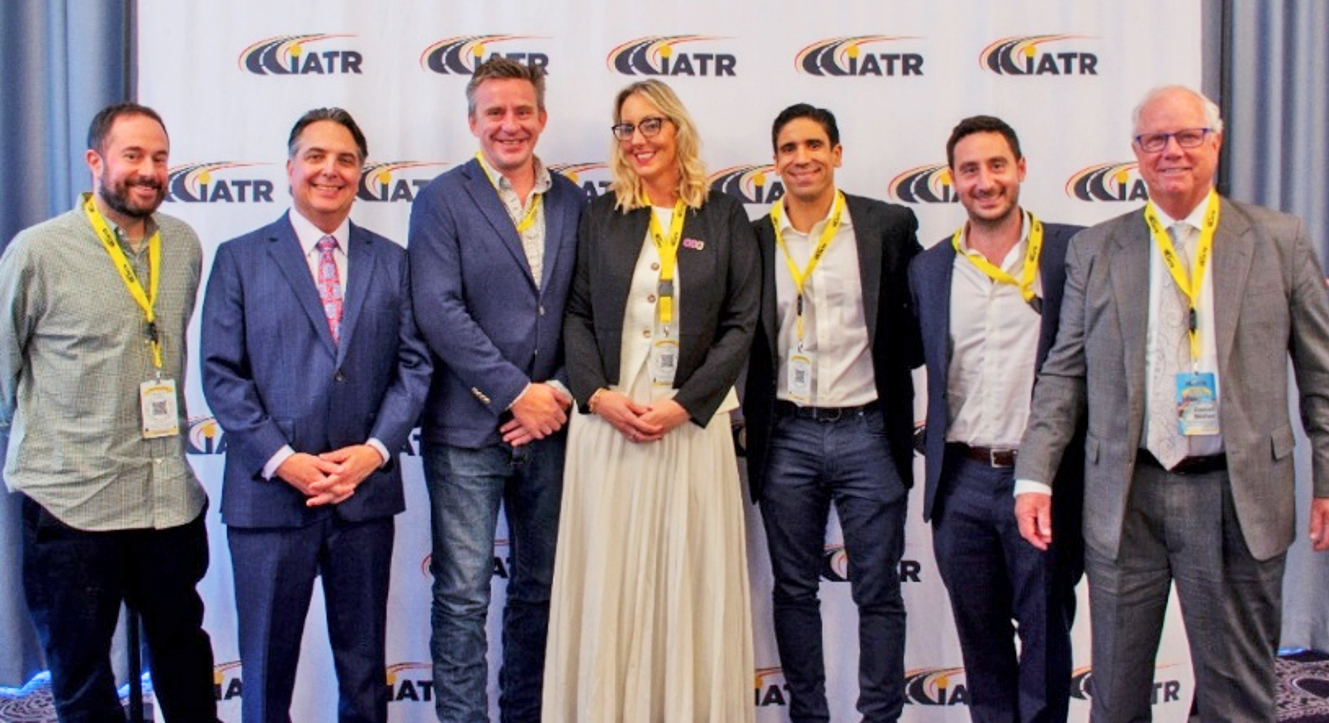
Matt delivered an overview of a report he authored with the UTRC, titled The NYC Taxi & For-Hire Vehicle Insurance Crisis: Root Causes & Solutions. The report identifies the root causes of the crisis and proposes actionable reforms to address the industry’s challenges. Proposed short-term solutions focus on immediate cost relief and risk reduction, including aligning No-Fault (PIP) limits with state-mandated minimums, allowing excess (surplus) lines policies to satisfy regulatory requirements, expanding for-hire vehicle rental options, mandating telematics to support risk mitigation and pricing relief, and creating safe-driver discount programs. Long-term, structural reforms include tort reform, attracting new entrants into the commercial vehicle insurance market to increase competition and lower premiums, and developing captive insurance models to give operators greater control over risk and costs.
Panelists offered complementary perspectives from across the insurance, platform, and operator ecosystem. Wilson Rosa discussed data-driven underwriting, arguing that telematics, cameras, and safety programs can help distinguish lower-risk drivers and fleets while enabling more sustainable pricing models. Andrew Don focused on the excess and surplus lines market, describing how uncertainty, nuclear verdicts, and inconsistent regulatory standards have driven premiums upward and limited carrier participation, while stressing the importance of fraud detection and regulatory clarity. Josh Gold outlined platform-level efforts to promote safety and reduce risk, including tech-enabled monitoring and partnerships with regulators, while noting the broader policy constraints that shape insurance availability nationwide. Jeremy Moskowitz spoke from an operator and fleet perspective, detailing how insurance costs directly affect vehicle access, driver earnings, and service availability, and highlighting options like captive insurance, self-insurance, and vehicle rental models to lower barriers to entry. Daniel Maher discussed New York’s excess lines market and ELANY’s role in monitoring trends, compliance, and fraud, while underscoring how regulatory oversight can support sound underwriting without stifling capacity. Finally, Renee Rogers emphasized worker-centric solutions, including alternative insurance structures and benefits models to improve affordability and stability for drivers.
The Automated Vehicle Movement: Syncing Technology with Policy (Robotaxis, Shared Mobility & Multi-Modal Integration)
The Automated Vehicle Movement: Syncing Technology with Policy (Robotaxis, Shared Mobility & Multi-Modal Integration) explored how rapidly advancing automated vehicle technologies can be aligned with effective regulatory frameworks to deliver safe, equitable, and integrated mobility systems. Moderated by Jane Lappin, Partner at Blue Door Strategy and Research, LLC, the session featured: Tilly Chang, Executive Director of the San Francisco County Transportation Authority; Vaughn Hartung, Chairman of the Nevada Transportation Authority; Camille Kamga, Professor and Director of the University Transportation Research Center at The City College of New York and Co-Chair of IATR’s African (MENA) Regulators Committee; Phil Koopman, Faculty Emeritus of Electrical and Computer Engineering at Carnegie Mellon University; Adam Lane, State and Local Policy lead at Waymo; Andrew Miller, Principal at Paladin Consulting; and Michael Schnuerle, Director of Open Source Operations at the Open Mobility Foundation. The panel examined the past, present, and future of the AV movement, addressing safety and Vision Zero, accessibility, electrification, workforce impacts, data standards, and emergency response.
From Left: Camille Kamga, Professor and Director of the University Transportation Research Center at The City College of New York and Co-Chair of IATR’s African (MENA) Regulators Committee; Adam Lane, State and Local Policy lead at Waymo; Jane Lappin, Partner at Blue Door Strategy and Research, LLC; Kim Ramkishun, Executive Director of the IATR; Vaughn Hartung, Chairman of the Nevada Transportation Authority; Michael Schnuerle, Director of Open Source Operations at the Open Mobility Foundation; Andrew Miller, Principal at Paladin Consulting; and Phil Koopman, Faculty Emeritus of Electrical and Computer Engineering at Carnegie Mellon University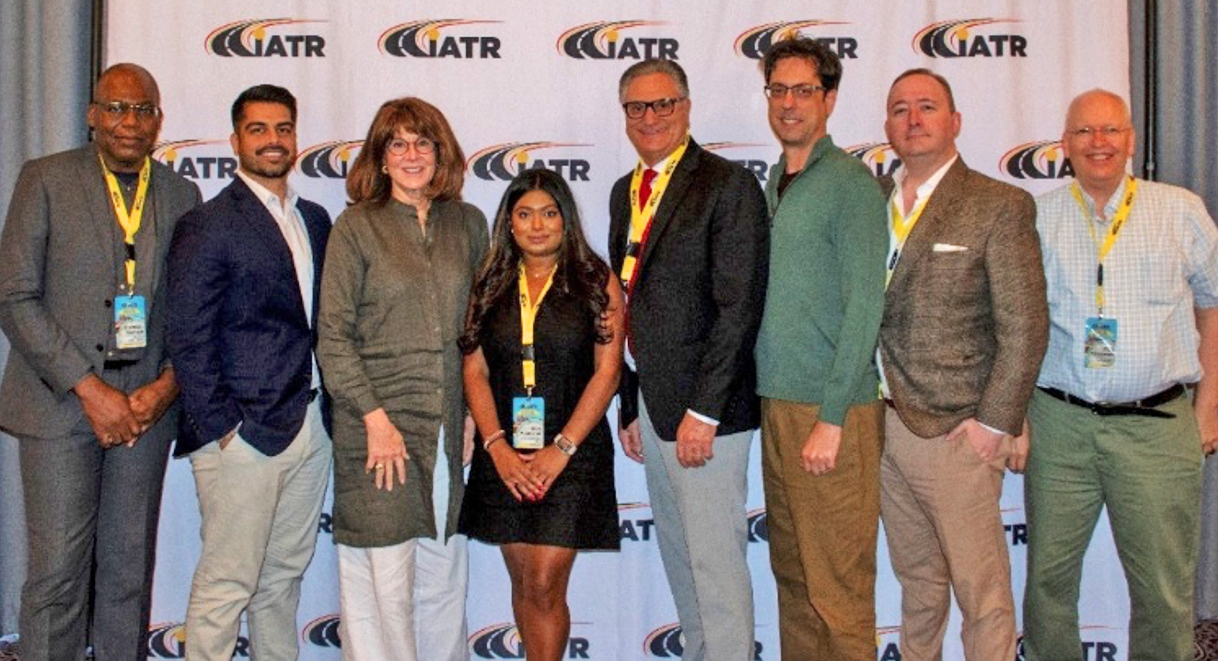
Tilly Chang emphasized the importance of integrating AVs into existing transportation planning and congestion-management strategies, noting that technology must support, not undermine, Vision Zero, transit performance, and equitable street use. She highlighted San Francisco’s focus on data sharing, curb management, and ensuring AV deployment aligns with broader city goals rather than operating in isolation. Vaughn Hartung discussed Nevada’s regulatory experience overseeing AV testing and deployment, stressing the need for clear safety accountability, strong permitting frameworks, and coordination between state and local regulators as AV services scale beyond pilot phases.
From an academic and research perspective, Camille Kamga highlighted workforce development and equity considerations, including the need to prepare technicians, planners, and regulators for an automated future while addressing potential labor displacement. He underscored the role of university-industry partnerships and federal research centers in grounding AV policy decisions in evidence rather than hype. Phil Koopman focused on AV safety and risk, cautioning against overreliance on optimistic claims and emphasizing the need for rigorous testing, transparency, and realistic performance metrics, particularly as mixed-traffic environments with human drivers persist.
Industry and practitioner perspectives rounded out the discussion. Adam Lane described how robotaxi operators work with regulators and emergency responders to ensure safe operations, data sharing, and incident response, while acknowledging the ongoing challenges of scaling AV services across jurisdictions with differing rules. Andrew Miller provided historical and policy context, noting that early phases of AV deployment are likely to create transitional challenges, including congestion and operational complexity, before longer-term benefits are realized. Finally, Michael Schnuerle highlighted the importance of open data standards and shared digital infrastructure, arguing that platforms such as the Open Mobility Foundation’s tools can help cities integrate AVs, shared mobility, and curb operations into a coherent, interoperable system.
Public Transit Partnerships with Taxis, FHVs, and TNCs: The Taxicab Exception & Beyond
Public Transit Partnerships with Taxis, FHVs, and TNCs: The Taxicab Exception & Beyond explored how public transit agencies can more effectively integrate taxicabs, for-hire vehicles, and transportation network companies into first- and last-mile service delivery, paratransit, and broader Mobility-as-a-Service (MaaS) strategies. Moderated by Alex Elegudin, Chief Executive Officer of Wheeling Forward and former Accessibility Chief at New York’s Metropolitan Transportation Authority (MTA), the session featured: Carl Fredlund, Strategic Director at MobilityData; Holly Graham, Vice President of Transportation at Modivcare; Ron Brooks, Senior Director of Policy and Stakeholder Engagement at UZURV; Jeff Maltz, CEO and Co-Founder of SilverRide; Judy Shanley, National Director of the Transportation and Mobility Group at Easterseals; Dmitriy Vanchugov, Global Head of Transit at Uber; Warren Whitlock, Federal Strategies lead at Race Forward; and Marilyn Yokley, Access Manager at WeGo Public Transit.
From Left: Dmitriy Vanchugov, Global Head of Transit at Uber; Holly Graham, Vice President of Transportation at Modivcare; Alex Elegudin, Chief Executive Officer of Wheeling Forward and former Accessibility Chief at New York’s Metropolitan Transportation Authority (MTA); Carl Fredlund, Strategic Director at MobilityData; Ron Brooks, Senior Director of Policy and Stakeholder Engagement at UZURV; Judy Shanley, National Director of the Transportation and Mobility Group at Easterseals; Matt Daus, President of the IATR; Marilyn Yokley, Access Manager at WeGo Public Transit; Warren Whitlock, Federal Strategies lead at Race Forward; and Jeff Maltz, CEO and Co-Founder of SilverRide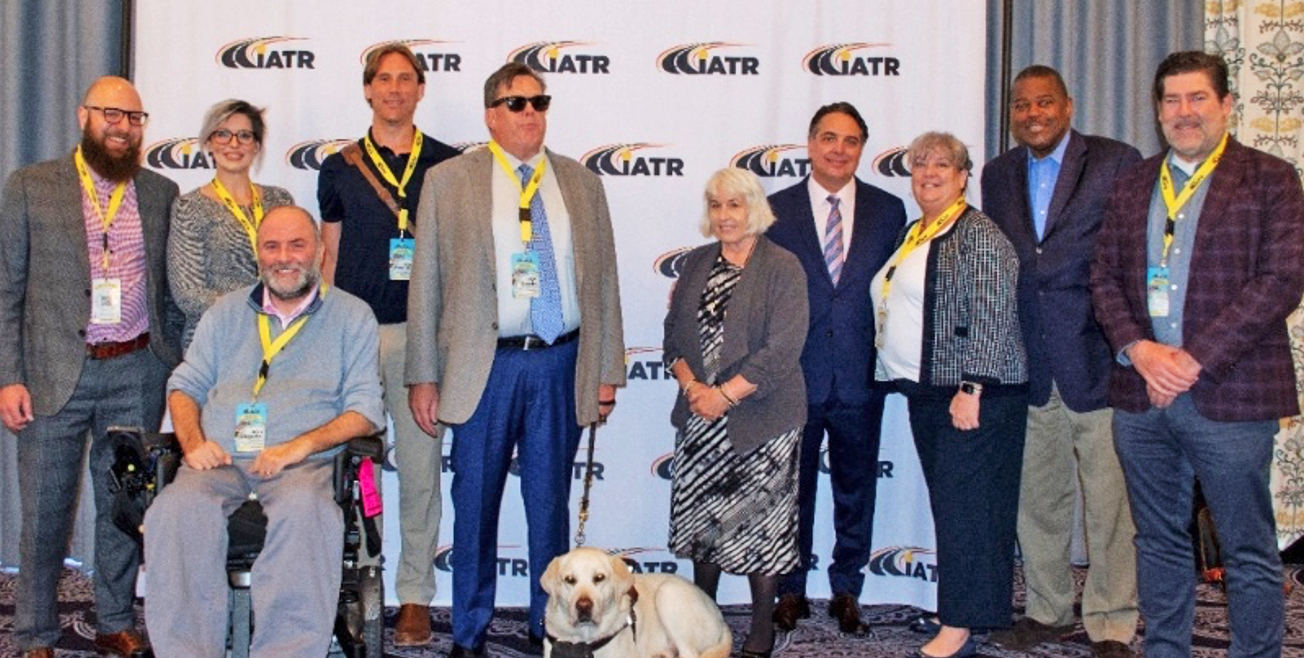
Alex Elegudin framed taxis and for-hire vehicles as long-standing but often overlooked partners in public transit, particularly for first- and last-mile service and paratransit for riders with disabilities and older adults. He emphasized that while pilot programs have demonstrated strong outcomes, the key challenge is moving from temporary demonstrations to scalable, permanent partnerships. Alex gave an overview of the IATR’s report, FTA’s Taxicab Exception: Modernizing Public Transit for a Multi-Modal Future, which outlines how existing state-level TNC laws may already serve the safety goals the FTA seeks to promote, and questions the FTA’s legal and procedural justification for the policy shift. Alex asked panelists and the audience how the exemption could be clarified or reformed to help transit-taxi partnerships grow and endure.
Carl Fredlund emphasized the role of open data standards in enabling seamless integration between public transit and on-demand services, arguing that interoperable platforms are foundational to scaling Mobility-as-a-Service (MaaS). Holly Graham discussed healthcare and non-emergency medical transportation partnerships, highlighting how coordinated for-hire services can improve reliability and outcomes for vulnerable populations while reducing system inefficiencies. Ron Brooks focused on wheelchair-accessible vehicle (WAV) services, underscoring the importance of rider-centered design, consistent driver training, and regulatory flexibility to make on-demand paratransit viable at scale.
From an operator perspective, Jeff Maltz highlighted the social and safety benefits of specialized services for older adults, while noting challenges related to funding stability and program continuity once pilot grants expire. Judy Shanley addressed the needs of people with disabilities, stressing that partnerships must be judged not only on cost savings but also on service quality, dignity, and independence for riders. Dmitriy Vanchugov discussed TNC-transit collaborations, including first- and last-mile connections and paratransit pilots. He emphasized the importance of clear federal guidance, particularly around the FTA’s taxicab exception, to enable broader adoption.
Warren Whitlock raised Equity and federal policy considerations, cautioning that partnerships must be designed to avoid reinforcing disparities and should prioritize underserved communities. Marilyn Yokley shared lessons from WeGo Public Transit, highlighting practical challenges transit agencies face in integrating on-demand services, including procurement rules, labor considerations, and long-term funding constraints.
The Future of Sustainable Transportation Policy: What Regulators Can Do to Help the Environment
The Future of Sustainable Transportation Policy: What Regulators Can Do to Help the Environment examined how transportation policy can meaningfully address congestion, emissions, and climate impacts while supporting shared and for-hire mobility. Moderated by Eric Richardson, Membership Director and Co-Chair of the Health and Safety Committee of the IATR, the session focused on the practical implementation of IATR’s congestion mitigation principles and the need for coordinated, multi-agency approaches. Panelists included: Lisa Daglian, Executive Director of the Permanent Citizens Advisory Committee to the MTA (PCAC); Michele Dottin, Education Director at the Independent Drivers Guild; John Orlando, President of Orlando Safety Solutions; Harrison Peck, Policy Manager at Uber; Katarzyna Turoń, Associate Professor at the Silesian University of Technology; and Arif Welcher, Assistant Director in the Office of Sustainability at the Port Authority of New York & New Jersey.
From Left: John Orlando, President of Orlando Safety Solutions; Katarzyna Turoń, Associate Professor at the Silesian University of Technology; Harrison Peck, Policy Manager at Uber; Michele Dottin, Education Director at the Independent Drivers Guild; Matt Daus, President of the IATR; Lisa Daglian, Executive Director of the Permanent Citizens Advisory Committee to the MTA (PCAC); Eric Richardson, Membership Director and Co-Chair of the Health and Safety Committee of the IATR; Arif Welcher, Assistant Director in the Office of Sustainability at the Port Authority of New York & New Jersey; and Carlton Thomas, Board Chair of the IATR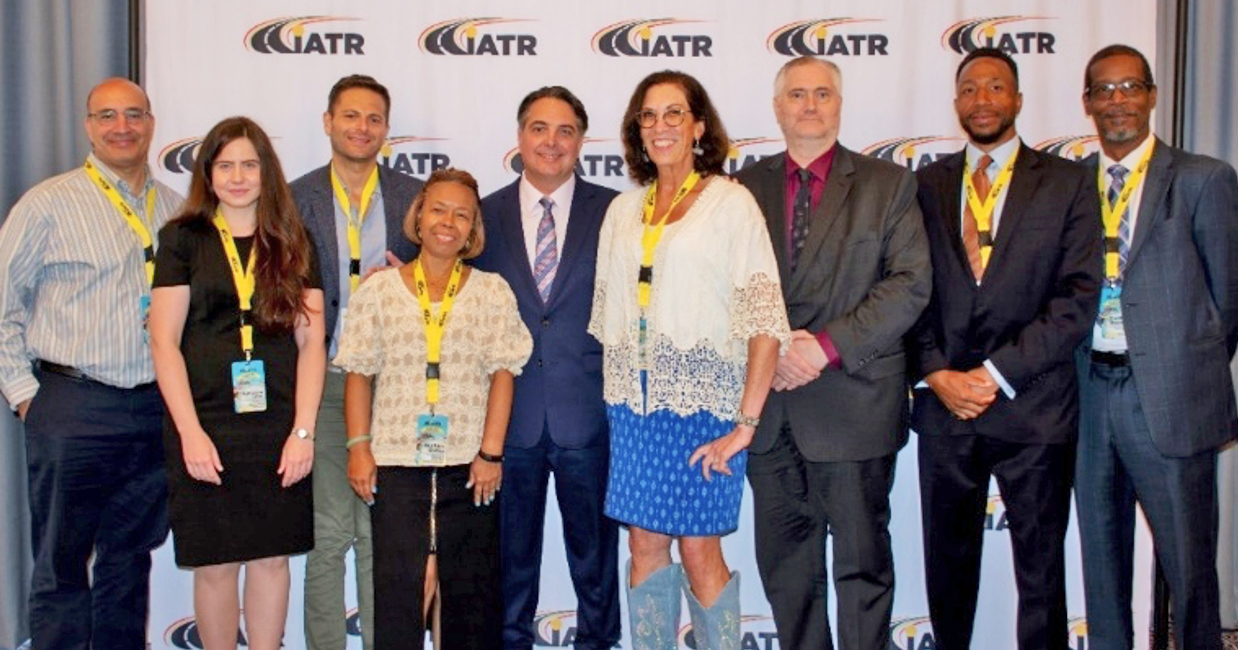
Eric Richardson set the framework by reviewing IATR’s congestion mitigation principles, emphasizing that reducing congestion, improving safety, and lowering emissions are mutually reinforcing goals. He noted that there is no one-size-fits-all solution, and that effective congestion mitigation requires a mix of policy tools tailored to local conditions. Eric stressed the importance of cross-agency coordination and engaging regulated mobility services as partners in implementing solutions.
Lisa Daglian highlighted the transit rider perspective, underscoring the importance of congestion pricing, reinvesting revenues in public transit, and accountability to riders for reliable, affordable service. Michele Dottin focused on the workforce dimension of sustainability, stressing that environmental policies must include driver education, fair transition strategies, and support for drivers navigating electrification and changing operating costs.
From a safety and systems perspective, John Orlando discussed how safety, sustainability, and congestion reduction are deeply interconnected, noting that safer driving behavior, enforcement, and technology can simultaneously reduce crashes, emissions, and roadway inefficiencies. Harrison Peck addressed the role of TNCs in sustainability strategies, highlighting data sharing, electrification incentives, and partnerships with cities to support congestion pricing, EV adoption, and multimodal integration while cautioning that policies must be flexible enough to reflect local conditions.
Katarzyna Turoń discussed global best practices in sustainable mobility, including integrating shared mobility, public transit, and land-use planning to reduce car dependency. She emphasized that reversing “car culture” requires long-term governance, behavioral change, and consistent policy signals. Finally, Arif Welcher described how large, complex transportation agencies like the Port Authority of New York & New Jersey are advancing sustainability through electrification, planning for charging infrastructure, and cross-agency coordination, while balancing environmental goals with operational realities.
Mobility Association Symphony
Mobility Association Symphony marked the first time IATR convened leaders from licensed and regulated transportation associations to share priorities, challenges, and policy perspectives with regulators. Moderated by Matt Daus, President of the IATR, the session brought together representatives spanning airports, chauffeured transportation, buses and motor coaches, taxis, and non-emergency medical transportation. Panelists included: Dave Bird, President of the Airport Ground Transportation Association (AGTA); Ray Mundy, Senior Advisor at the AGTA; Glenn Every, Director of the Bus Association of New York State (BANY); Peter Hicks, Executive Director of the Non-Emergency Medical Transportation Accreditation Commission (NEMTAC); Dan Reid, President of The Transportation Alliance (TTA); and Rick Versace, Board Member of the National Limousine Association (NLA). Matt emphasized that regulators often hear from individual sectors in isolation, and the goal of this session was to put all major licensed and regulated mobility associations on the same stage to surface common challenges, areas of tension, and opportunities for alignment.
From Left: Ira Goldstein, Executive Director of the Black Car Fund; Glenn Every, Director of the Bus Association of New York (BANY); Peter Hicks, Executive Director of the Non-Emergency Medical Transportation Accreditation Commission (NEMTAC); Dan Reid, President of The Transportation Alliance (TTA); Matt Daus, President of the IATR; Dave Bird, President of the Airport Ground Transportation Association (AGTA); Ray Mundy, Senior Advisor at the AGTA; and Rick Versace, Board Member of the National Limousine Association (NLA)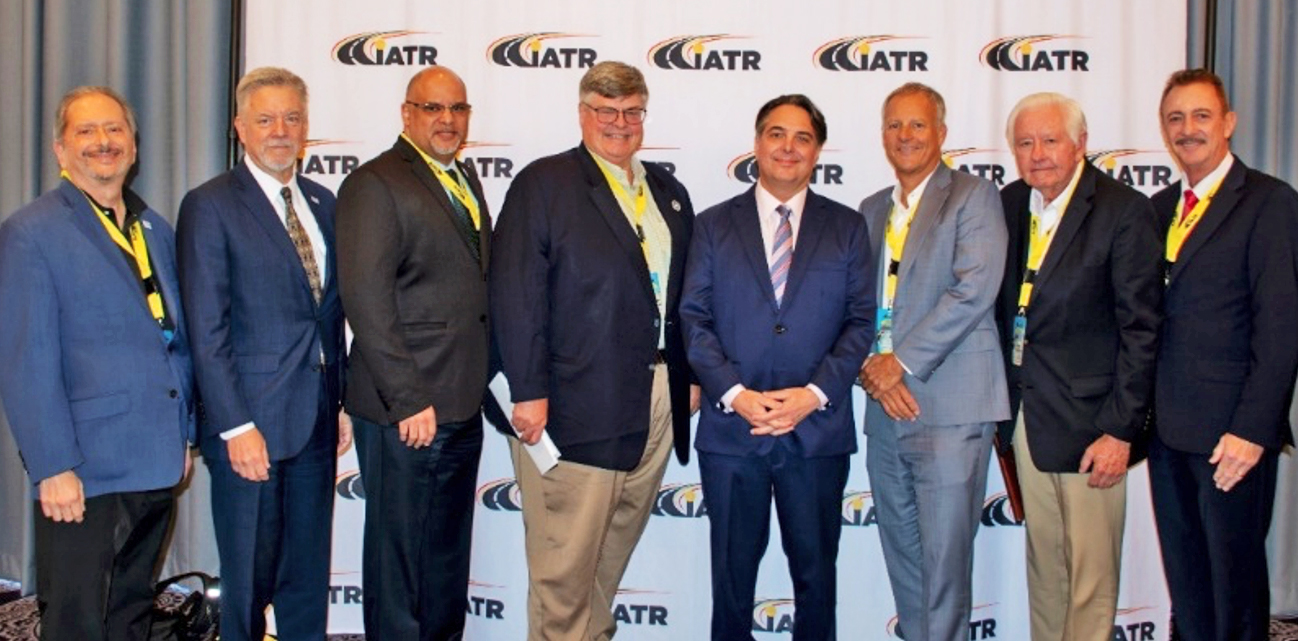
Representing the airport sector, Dave Bird and Ray Mundy discussed the unique regulatory and operational challenges at airports, including curb access, permitting consistency, congestion management, and the growing pressures from TNCs and evolving security requirements. They emphasized the need for clear coordination between airport authorities and local regulators to ensure fair competition and efficient passenger service.
Glenn Every highlighted issues facing the motorcoach and bus industry, including insurance affordability, workforce shortages, and the regulatory burden on small and mid-sized operators. He stressed the importance of modernization efforts that recognize the essential role buses play in regional mobility, tourism, and group travel. Peter Hicks focused on quality standards, accreditation, and patient safety, noting that consistent oversight and professionalization are critical to ensuring reliability and trust in NEMT services.
Dan Reid and Rick Versace addressed concerns around insurance crises, regulatory parity with TNCs, electrification mandates, and labor challenges. Both emphasized the need for regulators to engage directly with industry associations when designing policies, warning that one-size-fits-all rules can unintentionally destabilize long-standing, compliant operators.
Adding to the collaborative spirit, Ira Goldstein, Executive Director of The Black Car Fund, joined participants for a post-panel photo.
Mobility Management: Big Events & Nightlife Transportation
Mobility Management: Big Events & Nightlife Transportation examined how regulators can effectively plan for and manage passenger ground transportation during major events and late-night activity. Moderated by Karina Ricks, Partner at Cityfi, the session featured: Rupal Bapat, Deputy Commissioner of Public Passenger Vehicle Operations at the City of Chicago Department of Business Affairs and Consumer Protection (BACP) and Co-Chair of IATR’s Accessible Transportation Committee; Benton McDonough, Director of the Metro-Nashville Mayor’s Office of Nightlife and Executive Director of the Metro Beer Board; Jarvis Murray, Commercial Rideshare and Mobility Administrator at the Los Angeles Department of Transportation and Chair of IATR’s Technology and Innovation Committee; Doug Bermudez, Chief of EASY Card and Customer Experience at the Miami-Dade County Department of Transit and Public Works (DTPW); and Jill Plaza, Taxi and Contracted Transportation Services Administrator at SunLine Transit Agency.
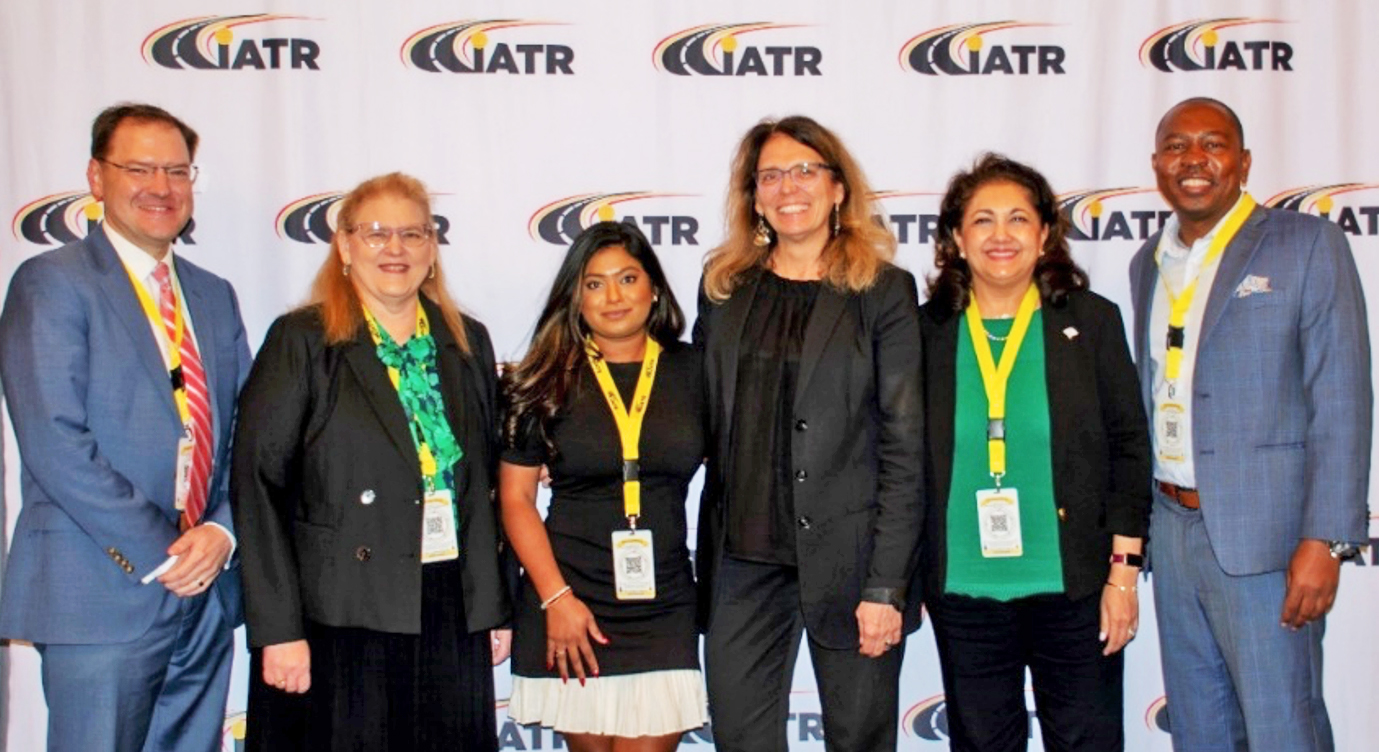
From Left: Benton McDonough, Director of the Metro-Nashville Mayor’s Office of Nightlife and Executive Director of the Metro Beer Board; Jill Plaza, Taxi and Contracted Transportation Services Administrator at SunLine Transit Agency; Kim Ramkishun, Executive Director of the IATR; Karina Ricks, Partner at Cityfi; Rupal Bapat, Deputy Commissioner of Public Passenger Vehicle Operations at the City of Chicago Department of Business Affairs and Consumer Protection (BACP) and Co-Chair of IATR’s Accessible Transportation Committee; and Jarvis Murray, Commercial Rideshare and Mobility Administrator at the Los Angeles Department of Transportation and Chair of IATR’s Technology and Innovation Committee
Rupal Bapat described Chicago’s approach to managing large events and everyday nightlife through curb management strategies, accessibility requirements, and coordination with city agencies and licensed operators. She highlighted how temporary rules, clear staging areas, and enforcement consistency help balance safety, equity, and supply during demand surges. Benton McDonough shared Nashville’s experience as a nightlife-driven city, explaining the role of the Mayor’s Office of Nightlife in coordinating transportation, alcohol regulation, and public safety. He emphasized data sharing, late-night transportation planning, and collaboration with taxis, shuttles, and TNCs to ensure patrons can get home safely.
From a technology and systems perspective, Jarvis Murray discussed Los Angeles’ preparations for mega-events such as the Olympics and World Cup, highlighting the use of digital tools, geofencing, data platforms, and interagency coordination to manage curb space, vehicle supply, and compliance at scale. Jim Peters framed transportation as a core component of responsible hospitality, arguing that safe, reliable late-night mobility is key to reducing impaired driving and improving outcomes for patrons and communities. He highlighted the role of nightlife districts, hospitality stakeholders, and non-profit partners in shaping effective local solutions.
Jill Plaza provided a transit-agency perspective, discussing how contracted transportation, shuttles, and taxis can complement fixed-route service during special events and late-night periods, particularly in suburban and resort contexts. She emphasized flexibility, temporary permitting, and coordination with event organizers as key tools for meeting fluctuating demand.
Mobility Movement Innovation Challenge
The conference concluded with an exciting new feature – the IATR’s first-ever Mobility Movement Innovation Challenge. Led by Doug Bermudez, Chief of EASY Card and Customer Experience at the Miami-Dade County Department of Transit and Public Works (DTPW), the challenge invited attendees to tackle a timely and socially significant question: “How can regulators and industry partners pilot a scalable program for safe, affordable late-night worker rides during demand surges?”
First Place Team and Judges From Left: Jarvis Murray, Commercial Rideshare and Mobility Administrator at the Los Angeles Department of Transportation; Valerie Lefler, Executive Director and Founder of Feonix Mobility Rising; Senikavika Jiuta, CEO of the Fijian Competition and Consumer Commission (FCCC); John Orlando, President of Orlando Safety Solutions; John Megow, Deputy Director of the City of Seattle Consumer Protection Division; Jason Stergion, Business Development Manager at Vontas; Angie De La Barrera, Principal Planner at Arlington County; and Leo Fewell, For-Hire Vehicle Administrator at the San Diego Metropolitan Transit System (MTS)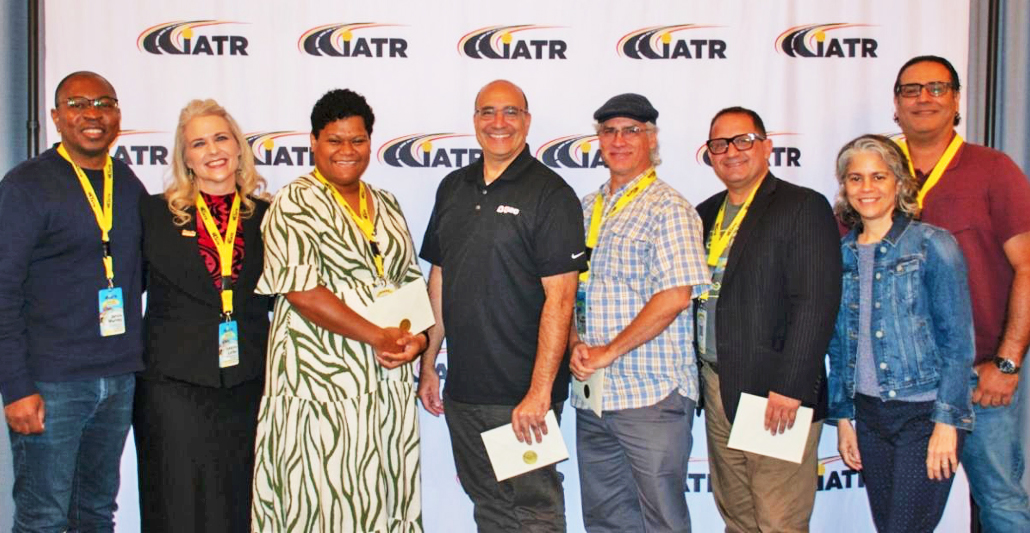
The theme “Let’s Reimagine the Ride Home” addressed the growing need for reliable, affordable transportation for restaurant and nightlife employees who finish work after public transit hours.
Participants were divided into small teams to brainstorm creative solutions, each delivering a two-minute pitch to a panel of expert judges:
- Jarvis Murray, Commercial Rideshare and Mobility Administrator at the Los Angeles Department of Transportation (LADOT)
- Angie De La Barrera, Principal Planner at Arlington County
- Leo Fewell, For-Hire Vehicle Administrator at the San Diego Metropolitan Transit System (MTS)
- Valerie Lefler, Executive Director and Founder of Feonix Mobility Rising
Judges evaluated each proposal based on feasibility, cost-effectiveness, creativity, and the level of risk involved in implementation. The process was truly nail-biting; every team presented viable, forward-thinking solutions. Several regulators remarked that they planned to bring these ideas back to their own jurisdictions for potential implementation.
The first-place team – the “Fiji App” team – took home top honors for their approach to improving late-night worker transportation access and safety. The winning team included:
- Senikavika Jiuta, CEO of the Fijian Competition and Consumer Commission (FCCC)
- John Orlando, President of Orlando Safety Solutions
- John Megow, Deputy Director of the City of Seattle Consumer Protection Division
- Jason Stergion, Business Development Manager at Vontas
The Innovation Challenge embodied IATR’s spirit of collaboration and forward-thinking problem-solving, giving regulators and mobility leaders a platform to collaborate on new ideas for the future of transportation policy and public service.
The Closing Party!
The IATR 2025 Conference came to a close in true Nashville style with an unforgettable Dinner and Gala Reception at Chief’s, featuring a live performance by the “Rocking Regulators” led by IATR President Matt Daus. Matt (The Mattch) did some serious shredding on lead guitar and was joined by lead singer, Jasmine Alice; Ed Bandas, National Account Executive at Broda on guitar; Rick Versace, Treasurer of the National Limousine Association and President of the Florida Limousine Association on keyboards; and former NYC Mayor’s Office of People with Disabilities Commissioner Jason Mischel on bass guitar.
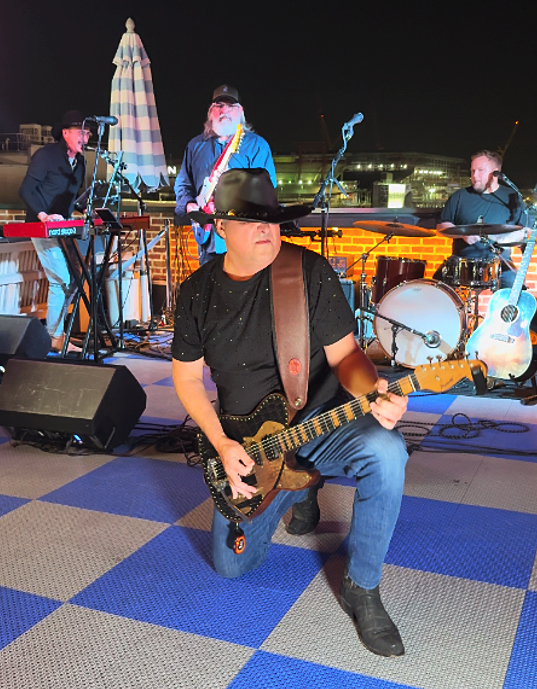
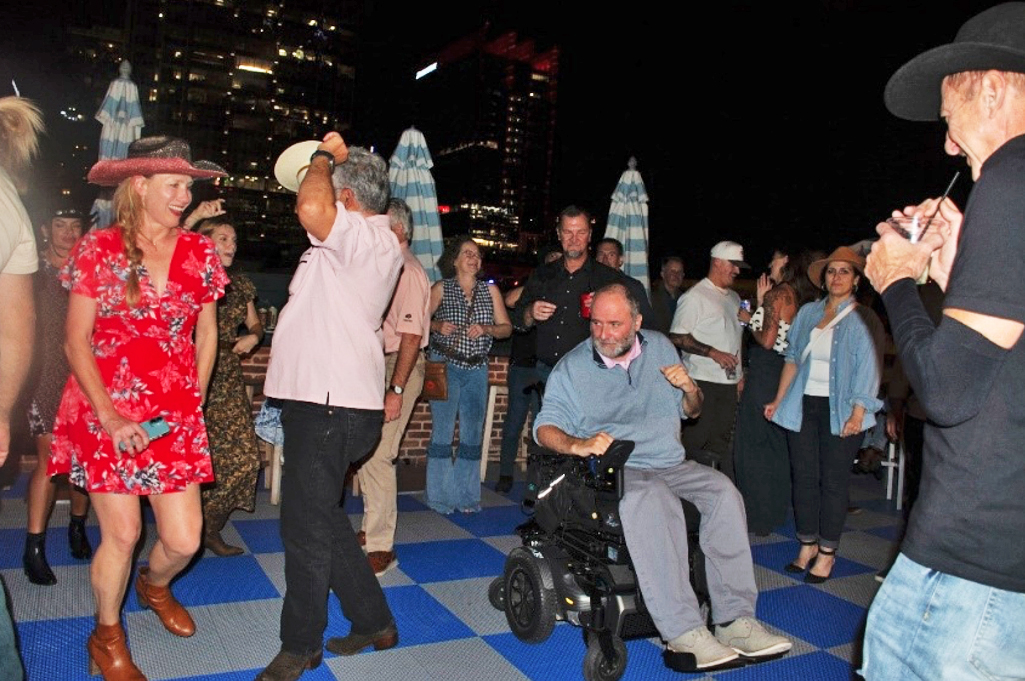
Held at the iconic Leslie Warner Building at Chief’s, attendees enjoyed world-class barbecue prepared by James Beard Award–winning chef Rodney Scott and a spirited night of music, camaraderie, and celebration. The “Mobile Homeboys” brought down the house with an energetic set that perfectly captured the Music City spirit, blending rock, blues, and classic hits that had guests dancing and singing along. (Watch Some of the Performance Here!)
The evening also included the presentation of this year’s IATR Awards, honoring exceptional regulators, volunteers, and drivers from around the world. It was a fitting finale to a week of innovation, collaboration, and celebration – proving that when it comes to transportation regulators, we know how to keep things moving both on and off the stage!
Next Stop, AV City – Viva Las Vegas!
The IATR is excited to announce that its 39th Annual Conference will be held in Las Vegas, Nevada, bringing the global community of transportation regulators, policymakers, and industry leaders to one of the world’s most dynamic and innovative cities. Las Vegas represents a natural and strategic setting for IATR 2026, as the conference will emphasize automated vehicles (robotaxis) and the evolving regulatory frameworks governing autonomous mobility. As the only global organization representing autonomous-vehicle and robotaxi regulators, IATR is uniquely positioned to convene public officials and stakeholders shaping real-world AV deployment, oversight, and integration across jurisdictions.
The theme of IATR 2026 – AV City: Autonomous Mobility – is deeply rooted in Las Vegas’s transportation history. The city’s growth was first catalyzed by rail, positioning Las Vegas as a critical stop in the regional mobility network, and later accelerated by the development of highways and aviation that transformed it into a global destination. Across each era, Las Vegas has served as a testing ground for new mobility models and large-scale transportation systems.
From Left: Kim Ramkishun, Executive Director of the IATR; Las Vegas Mayor Shelley Berkley; and Matt Daus, President of the IATR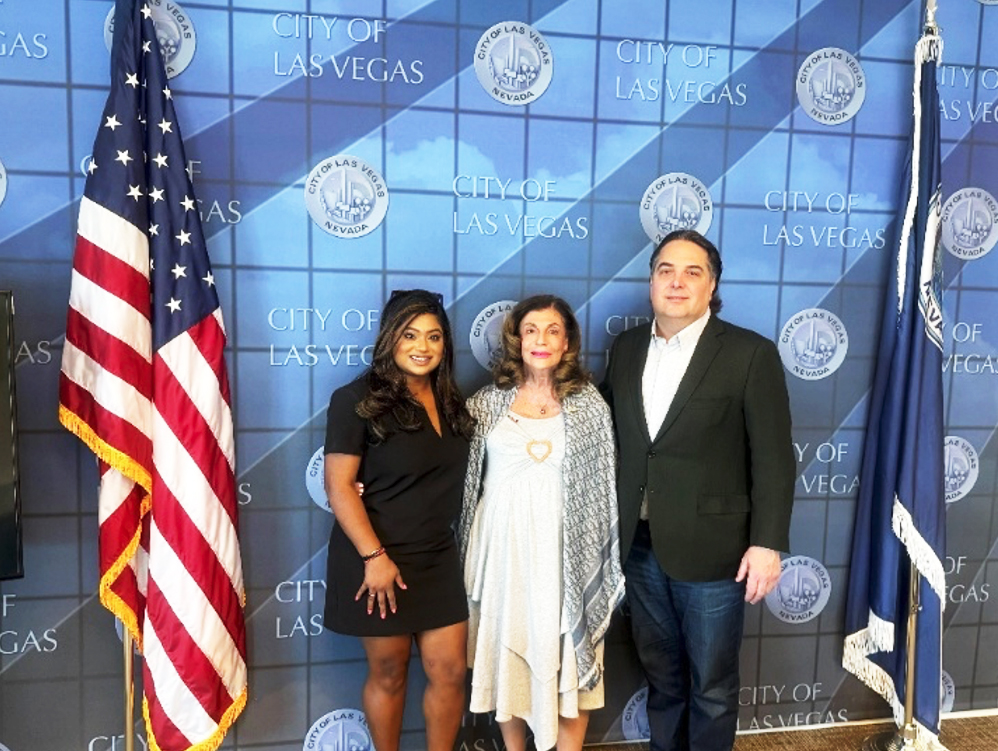
Today, that legacy continues in tangible and measurable ways. Under the leadership of Mayor Shelley Berkley, elected in 2024 and a former member of the U.S. House Transportation Committee, Las Vegas is advancing a Vision Zero strategy to eliminate traffic fatalities by 2050 while investing in complete streets, pedestrian safety, and smart infrastructure. Nevada was the first state to authorize autonomous vehicle testing, and the region remains a national hub for deployment: Zoox launched its first U.S. commercial robotaxi service in Las Vegas in 2025; Waymo began testing along the Strip in early 2025 and is preparing for commercial rollout this summer, covering the Strip, surrounding areas, and eventually the airport.
The city also continues to support connected-vehicle infrastructure through the Regional Transportation Commission of Southern Nevada’s (RTC) FAST intelligent transportation system, LiDAR-based 3D mapping, downtown wireless networks, and GPS base stations for AV integration. At the same time, mobility innovation extends beyond robotaxis – from the expanding Boring Company tunnel system and remote-driven electric vehicle rentals to food delivery robotics and a $378 million bus rapid transit investment – while the $3 billion federally backed Brightline high-speed rail project prepares to connect Las Vegas to Southern California by 2029.
This convergence of autonomous deployment, intelligent infrastructure, high-capacity transit investment, and active regulatory oversight – including state-level taxi and for-hire regulation and enforcement against illegal operators – makes Las Vegas a living laboratory for the next phase of mobility governance. Our 2026 conference theme reflects the shift from isolated pilots to fully integrated transportation ecosystems, where vehicles, infrastructure, policy, and public trust must evolve together. But this evolution is not without complexity.
The deployment of shared-connected-automated-electric vehicles (S-CAEVs) raises socio-economic questions for regulators, industry stakeholders, and professional drivers alike, including workforce development and minimizing labor displacement; insurance and risk allocation; accessibility mandates; affordable service delivery in underserved areas; governance harmonization; and sustainable business models. IATR has already laid the foundation for addressing these issues through its Best Practices, Guiding Principles & Model Regulations for Robotaxis, which promote safety, sustainability, accessibility, affordability, and a uniform framework for liability and insurance in both testing and full implementation. At IATR 2026, we will build upon and update that work, moving beyond guiding principles toward the continued development of model regulations and an international framework that reflects the realities of scaled autonomous deployment. The conference will bring together regulators, drivers, industry leaders, academics, disability advocates, insurers, and policymakers to tackle these difficult issues directly and chart a responsible path forward.
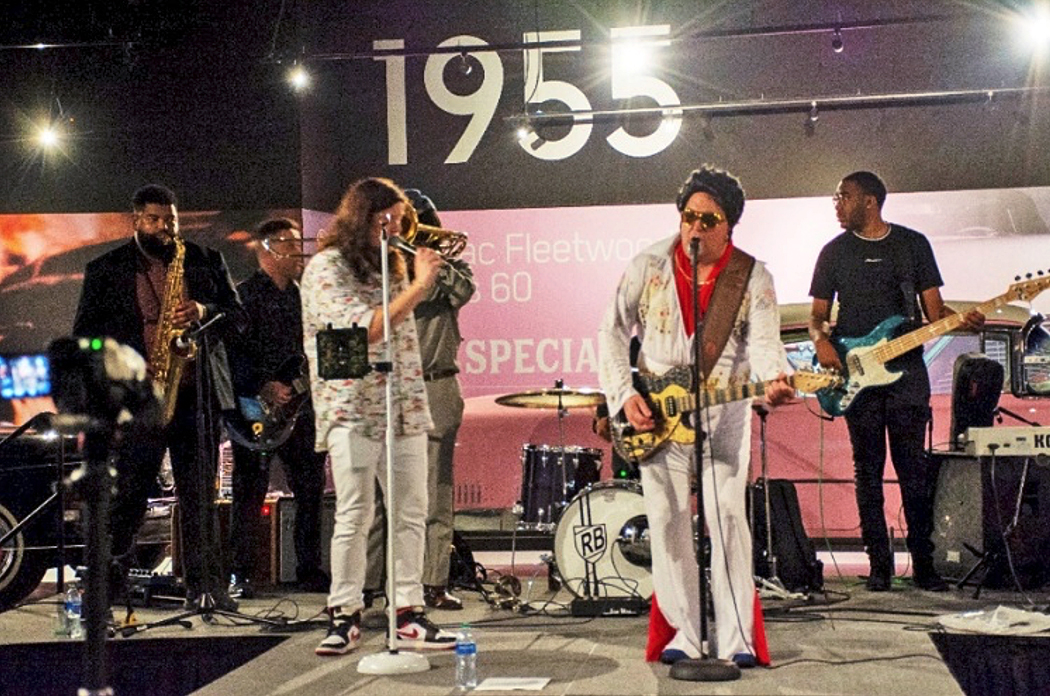
Will Elvis be in the building again at IATR Vegas?
IATR 2026 will once again deliver a high-caliber program featuring substantive policy discussions, regulator-to-regulator knowledge exchange, and candid engagement with industry, academia, and advocacy leaders. From September 14-17 at the Vdara Hotel in Las Vegas, attendees can expect robust networking opportunities and a global exchange of best practices focused on how regulators can responsibly guide autonomous mobility from pilot to scale. Please save the dates and visit iatr.global for additional information and upcoming announcements. Additional program highlights and speaker details will be shared in the coming months. We look forward to welcoming the IATR community to Las Vegas for what promises to be a defining conference at a pivotal moment for autonomous transportation regulation.


