Read the road ahead. Leave road rage behind.
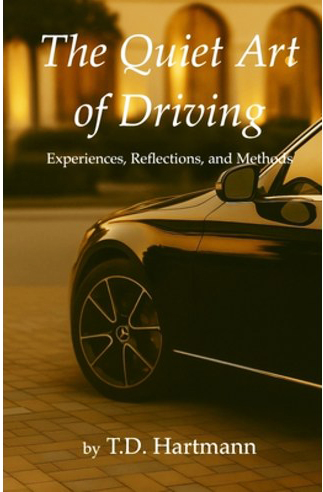
(The following is an excerpt from The Quiet Art of Driving by T.D. Hartmann)
Many drivers only watch the car directly ahead. Skilled chauffeurs read traffic three or four cars up. You notice brake lights through windshields. You track the van that drifts between lanes. You notice bicycles and pedestrians before making a right turn. You notice when another car is about to squeeze in front of you because you keep the proper distance.
Reading traffic ahead keeps you smooth. But the real challenge is your own reaction to what happens around you. Tailgaters, sudden lane changes, aggressive drivers. Someone else drives too slow and never uses the indicator. These moments test something deeper than your driving skills. They test your mental state.
Your reaction shapes not only your driving but also the energy inside the cabin – and how you handle pressure everywhere else.
Road Rage Is Toxic Energy
The moment you lose control – with honking, gestures, muttering, or even just getting quietly annoyed – you lower your standard. You lose to yourself.
Road rage follows different rules than normal human interaction. On a crowded sidewalk, someone bumps into you. You make eye contact. They smile apologetically. You smile back. The whole exchange takes two seconds and leaves no anger.
In traffic, if someone cuts you off, you can’t see their face. They can’t see yours. No smile or wave to ease the moment. The metal and glass barrier creates psychological distance. The other driver stops being a person and becomes an obstacle. An opponent.
Always Assume Positive Intent
If someone cuts you off, imagine they are distracted by a family crisis. If they weave through lanes, perhaps they are rushing to the hospital. If someone drives unusually slow and hesitant, maybe they just got their license.
This mental reframe is a choice. You choose the story you tell yourself about their behavior. That story determines your emotional response.
“You can tell yourself: ‘That driver is reckless and disrespectful.’ That story produces anger. The anger stays with you. It colors the next 10 minutes, maybe the whole drive. Or you can tell yourself: ‘Something urgent must be happening. They’re stressed. They made a mistake.’ That story produces understanding. The moment passes.”
Both stories could be true. Neither can be proven in that instant. So why choose the one that makes you angry?
A Quiet Story: Stay in the Car
Here is a story about the time I forgot to reset – and paid for it.
I had just finished a long shift ending with four hours of non-stop driving. I had dropped off my VIP and wanted to get home. A car had stopped dead-center on a one-way street, waiting for a parking spot. The street was wide enough for two cars. If he had just pulled to one side, I could have passed. But he stayed dead center, blocking everyone.
I flashed my headlights and waited. Nothing. I flashed again. Still nothing. I lost patience. I stepped out and knocked on his window. He looked like a calm, clean-cut man in his thirties. A child sat in a car seat in the back. I asked him loudly through the window to pull aside. No reaction. Then I asked, “Do you even have a driver’s license?”
He slammed his door open into my face. My nose started bleeding. I was stunned by the pain and by how quickly he snapped, especially with a child in the car. I got back in my vehicle and breathed. I told myself how foolish it was to get out.
Could I have escalated? Maybe. But for what? To win an argument no one would remember except his daughter, who would be in tears. My suit torn. Police on the way. A long talk with my boss that ends with “You are no longer needed.” This was not about weakness. It was about understanding my job. I provide a service. I do not dispense street justice. Since then: I stay in the car. Always.
Never step out. Never escalate. Never take the bait. You never know who you are dealing with. Someone who looks calm may be full of rage, on drugs, desperate, or trained to fight.
Your mindset shapes driving quality more than technique. Choose anticipation over reaction – and smooth thinking will produce smooth rides.
T.D. Hartmann has worked for years as a professional chauffeur in diplomatic and corporate transport, serving ministers, ambassadors, CEOs, artists, and private families. The work demanded absolute discretion – which is why the pseudonym exists. The book holds everything that experience taught. To learn more, visit www.quietartofdriving.com or contact him at contact@quietartofdriving.com.