How Electric Ferries and Advanced Air Mobility Will Reshape Our Transportation Future
As cities across the United States continue searching for new ways to address congestion, improve connectivity, and modernize aging transportation networks, two mobility sectors once viewed as futuristic concepts are increasingly moving toward operational reality: advanced air mobility (AAM) and expanded waterborne transportation.
Recent developments suggest that this transition is accelerating quickly. In April 2026, the U.S. Department of Transportation announced a $657 million investment through the Federal Transit Administration to modernize ferry infrastructure nationwide, expand ferry routes, improve terminal accessibility, and support new vessels. The initiative reflects growing recognition that ferries are not simply tourist attractions or niche transportation services, but essential components of regional mobility systems capable of connecting workers, families, and communities more efficiently.
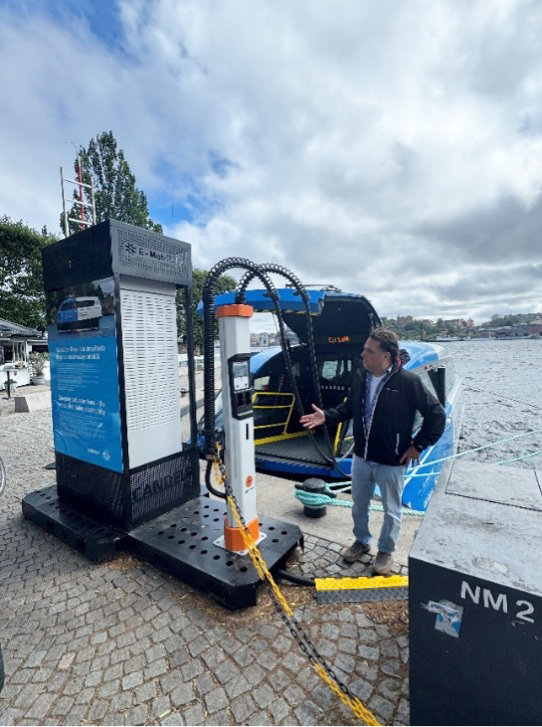
Matt Daus, President of the International Association of Transportation Regulators (IATR), exploring Stockholm’s hydrofoil electric ferries
Momentum is also building at the federal and state levels around long-term maritime investment strategies. The ferry industry is currently at a pivotal moment, as the Bipartisan Infrastructure Law approaches its September 2026 expiration date and lawmakers debate the future of federal ferry funding programs. The proposed bipartisan FERRIES Act would significantly expand long-term ferry investment, increase funding for electrification and fleet modernization, support domestic shipbuilding jobs, and move several ferry programs from temporary pilot status into permanent federal transportation law.
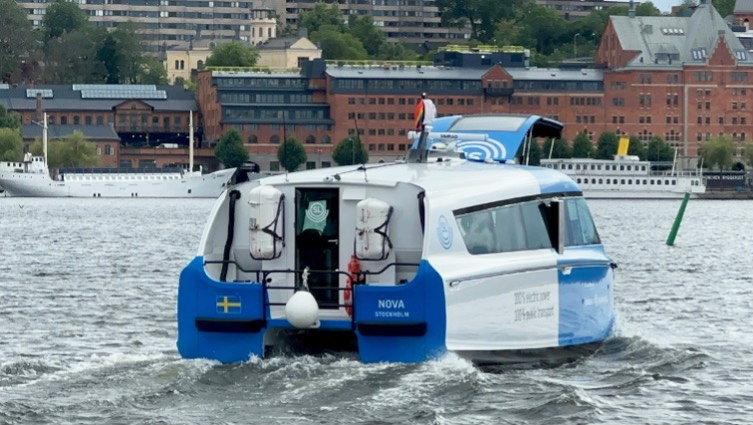
The Stockholm hydrofoil electric ferry
The broader ferry landscape in the United States is also evolving rapidly. Ridership has rebounded strongly in major systems nationwide, with NYC Ferry carrying a record 7.4 million passengers in 2024 and Washington State Ferries surpassing 20 million riders in 2025 for the first time since before the pandemic. Meanwhile, cities and operators are increasingly pursuing zero-emission and hybrid-electric ferry projects, including battery-electric ferries in the San Francisco Bay Area, hybrid-electric vessel conversions in Washington State, and renewable diesel transitions in New York City.
Many transportation agencies are also beginning to view waterways as critical transportation corridors capable of addressing both passenger and freight mobility needs. New York City’s Downtown Skyport initiative, for example, is being developed as both an Electric Vertical Take-Off and Landing (eVTOL) aircraft hub and a maritime freight hub designed to reduce truck traffic and move goods more sustainably using waterfront infrastructure.
At the same time, the advanced air mobility sector is entering a pivotal phase in the United States. After years of testing, demonstrations, and regulatory development, several major companies are now preparing for initial commercial operations. Companies such as Archer Aviation and Joby Aviation expect to begin commercial service this year, while the Federal Aviation Administration’s (FAA) eVTOL Integration Pilot Program (eIPP) is working to accelerate deployment in partnership with state and local governments.
The current AAM landscape reflects a rapidly-evolving mix of technology development, infrastructure planning, and regulatory coordination. At the same time, the regulatory framework surrounding AAM remains highly fragmented and continues to evolve. While the FAA maintains primary authority over aircraft certification and airspace management, state and local governments are expected to play increasingly important roles involving vertiport siting, zoning, land use approvals, environmental review, utility coordination, and local operational planning.
As a result, many industry stakeholders now view intergovernmental coordination as one of the sector’s most significant long-term challenges. Similar to the early rollout of ride-hail platforms, micromobility systems, and autonomous vehicle pilots, the pace of deployment may depend not just on technological readiness, but also on how effectively federal, state, and local agencies align regulatory frameworks, infrastructure planning, and community engagement efforts.
Demonstration flights are already taking place in major metropolitan areas, including New York City, where Joby recently conducted flights at John F. Kennedy International Airport and announced plans to install charging infrastructure at Manhattan heliports. The Port Authority of New York and New Jersey has also issued a solicitation for a vertiport operator at LaGuardia Airport, underscoring growing institutional support for integrating AAM into regional transportation systems.
The rapid expansion of electrified aviation infrastructure is also beginning to raise broader utility and energy planning questions. Similar to large-scale electric vehicle charging networks and ferry electrification projects, widespread AAM deployment will require substantial grid capacity, utility coordination, charging infrastructure investment, and long-term energy planning. In dense urban environments, electrical demand associated with vertiports and fast-charging systems could become a significant infrastructure challenge as commercial operations scale.
Elsewhere across the country, Florida, Texas, North Carolina, Oklahoma, and several western states are emerging as major testing and deployment markets. At the same time, questions about infrastructure financing and long-term operational funding are key concerns. Unlike traditional aviation infrastructure, there is currently no comprehensive federal funding framework dedicated specifically to vertiport deployment, charging systems, or supporting urban AAM infrastructure. As a result, many early projects are being accomplished through public-private partnerships involving airports, transportation authorities, utilities, real estate developers, and private mobility companies.
Several metropolitan regions are increasingly viewing AAM as a transportation initiative and an economic development opportunity tied to advanced manufacturing, tourism, technology investment, and workforce development. Competition among cities and states to position themselves as early deployment markets has intensified significantly, particularly in regions seeking to establish leadership roles within emerging mobility industries.
Orlando International Airport is developing vertiport infrastructure, while Texas continues to position itself as a leading hub for AAM testing and integration efforts. Meanwhile,
companies like Wisk Aero are pursuing fully autonomous aircraft concepts, adding another layer of complexity to the regulatory and operational environment.
The regulatory environment surrounding these aircraft is also becoming increasingly complex as the industry moves closer to commercialization. In addition to traditional aircraft certification requirements, the FAA is simultaneously developing operational certification pathways, pilot training standards, maintenance requirements, and broader airspace integration frameworks tailored specifically to eVTOL operations. Industry stakeholders increasingly view certification timelines as one of the most significant factors that will determine the pace of commercial deployment nationwide.
The emergence of autonomous and remotely-supervised aircraft concepts may further complicate the regulatory landscape. While initial deployments are expected to involve onboard pilots, companies pursuing fully-autonomous operations could eventually force regulators to confront many of the same liability, safety oversight, cybersecurity, and operational redundancy questions already emerging within the autonomous vehicle sector. Questions surrounding responsibility for system failures, remote supervision requirements, software certification, and insurance liability allocation remain largely unresolved.
CoMotion on the Ocean!
These developments formed the backdrop for several major discussions at CoMotion Miami 2026, where transportation leaders, regulators, public officials, and private sector innovators examined how emerging mobility technologies are beginning to reshape urban transportation systems. I had the pleasure of moderating two exciting panels.
During the panel “CoMotion on the Water: Unlocking Urban Waterways for Passenger & Freight Mobility,” we explored how cities are increasingly turning to waterways as viable transportation corridors that support both passenger mobility and freight movement. I was joined by Adam Triolo, VP of Commercial Business Development at REGENT; and Neill Etheridge, Co-founder of The Twenty Five (Watch the Full Panel Here!).

From Left: Adam Triolo, VP of Commercial Business Development at REGENT; Neill Etheridge, Co-founder of The Twenty Five; and Matt Daus, IATR President
The discussion emphasized that waterways remain one of the most underutilized components of many urban transportation systems, particularly in coastal cities facing severe roadway congestion and infrastructure constraints. The panelists examined how ferries, maritime freight services, and emerging technologies such as seagliders (an all-electric hybrid between a high-speed boat and an airplane) could help create more flexible and sustainable transportation networks while reducing pressure on existing roads and bridges.
The panel also highlighted the growing convergence between maritime mobility and other emerging transportation sectors. We touched on the role of maritime electrification, waterfront infrastructure modernization, freight logistics, and the increasing overlap between waterborne freight strategies and broader multi-modal transportation planning efforts. We emphasized that ferries are more than isolated transportation assets; they are integral components of resilient regional mobility ecosystems.
Another major focus of the discussion involved freight and logistics. As cities continue struggling with curb congestion, delivery demand, and urban truck traffic, panelists explored how waterways and marine highway concepts can help create alternative freight corridors that improve efficiency, while reducing emissions and roadway impacts.
CoMotion in the Sky!
The second panel I moderated was titled “Is AAM Cleared for Takeoff? Safety, Regulation & Public Readiness,” which focused on the rapidly evolving advanced air mobility sector and the growing push toward commercial deployment of eVTOL aircraft. That panel included Aileen Bouclé, Executive Director of the Miami-Dade Transportation Planning Organization; Jacques Coulon, Mobility Innovation Manager for the City of Orlando; Ernest Huffman, Program Manager at the North Central Texas Council of Governments; and Jeffrey Vincent, Regional Administrator for the Southern Region of the Federal Aviation Administration. Our discussion centered on how regulators, local governments, airports, and private developers are preparing for the integration of AAM into existing transportation systems and urban airspace.
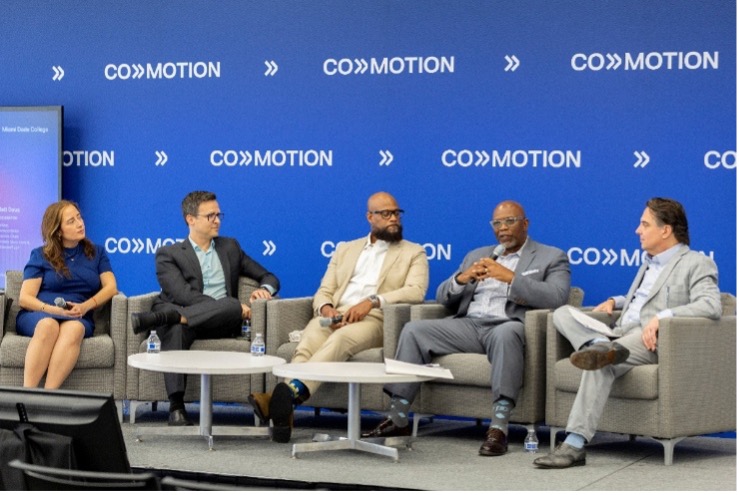
From Left: Aileen Bouclé, Executive Director of the Miami-Dade Transportation Planning Organization; Jacques Coulon, Mobility Innovation Manager for the City of Orlando; Ernest Huffman, Program Manager at the North Central Texas Council of Governments; Jeffrey Vincent, Regional Administrator for the Southern Region of the Federal Aviation Administration; and Matt Daus, IATR President
A major focus of the discussion involved the transition from pilot projects and demonstrations toward scalable commercial operations. Panelists examined how federal, state, and local agencies are increasingly moving from theoretical planning discussions to operational implementation, including airspace coordination, vertiport siting, charging infrastructure deployment, certification pathways, and safety oversight frameworks.
The panel also explored the broader policy landscape emerging around AAM deployment in the United States. Participants discussed how cities and airports are beginning to compete for leadership positions in the sector, viewing AAM not only as an opportunity for transportation innovation, but also as an economic development strategy tied to technology investment, tourism, workforce development, and long-term infrastructure modernization.
Public acceptance and trust emerged as particularly important themes. Panelists noted that, while the technology itself has advanced rapidly, successful deployment will ultimately depend on demonstrating safety, minimizing noise impacts, ensuring equitable access, and building public confidence through transparent regulation and oversight. Comparisons were drawn to the early rollout of autonomous vehicles and ride-hail platforms, where public trust and regulatory adaptation became critical determinants of long-term success.
Our discussion reinforced that advanced air mobility should not be viewed as a replacement for traditional transit systems, but rather as a complementary transportation layer that can address specific mobility gaps. Potential use cases discussed included airport connectivity, regional commuting, emergency response, medical transport, cargo logistics, and transportation access in areas where conventional infrastructure expansion may be difficult or cost-prohibitive (Watch the Full Panel Here!).
Impacts on For-Hire Ground Transportation Businesses
The expansion of AAM and maritime transportation networks may also have significant implications for the traditional taxi, for-hire vehicle, and chauffeured transportation industries, particularly in major urban markets where first-mile and last-mile connectivity remain critical challenges. Many AAM and ferry operators are increasingly envisioning their services as interconnected components of broader multi-modal mobility ecosystems. That reality creates both opportunities and uncertainties for taxi, black car, limousine, and ride-hail providers.
In the near term, traditional ground transportation services may become essential operational partners for emerging mobility platforms. Air taxis and ferry systems will depend heavily on efficient first-mile and last-mile connections to move passengers between vertiports, ferry terminals, airports, business districts, hotels, and residential neighborhoods. In most cities, the taxi and for-hire vehicle industries already have the operational expertise, dispatch systems, airport access, regulatory infrastructure, and professional driver networks necessary to support these connections. At the same time, the growth of AAM may reshape portions of the existing transportation marketplace. If air taxi services become commercially-scalable and financially-accessible, the black car and chauffeured transportation industry could face increasing competition for premium airport transfers, regional commuter trips, and certain high-end business travel segments.
The regulatory structure surrounding AAM and ferries will become increasingly important. Questions surrounding licensing, insurance,
safety oversight, labor impacts, accessibility requirements, and interoperability with existing transportation providers remain largely unresolved. Similar to the early rise of transportation network companies (TNCs), policymakers may once again face the challenge of integrating new market players without undermining existing transportation industries that provide critical public services and employment opportunities.
Labor considerations may become especially significant. Some policymakers and labor advocates have already raised concerns about workforce displacement associated with automation and autonomous mobility systems. Discussions surrounding autonomous aircraft, remotely operated systems, and advanced dispatch technologies may ultimately mirror many of the debates currently unfolding around autonomous vehicles and robotaxis.
At the same time, entirely new workforce categories may emerge from AAM, AVs, and ferries. As advanced mobility systems scale, there may be growing demand for mobility concierges, safety monitors, terminal operations personnel, charging and maintenance technicians, dispatch specialists, and multi-modal transportation coordinators. In some scenarios, traditional chauffeured transportation operators may evolve into integrated mobility service providers capable of coordinating trips across ground, maritime, and aerial transportation networks.
Ultimately, the transportation industry is unlikely to move toward a single dominant mode. Instead, the future may belong to increasingly interconnected systems where taxis, ferries, ride-hail services, microtransit, autonomous vehicles, and advanced air mobility platforms operate as complementary layers within larger regional mobility ecosystems. The challenge for regulators and industry leaders alike will be ensuring that innovation enhances transportation access and efficiency without sacrificing safety, workforce stability, accessibility, or public trust.
The Future of Mobility Is Here: The Multi-Modal Technology-Driven Ecosystem
The two CoMotion sessions reflected a broader transformation underway across the transportation sector. For decades, urban mobility planning largely centered around roads, rail systems, and fixed-surface infrastructure. Today, cities are increasingly exploring how airspace and waterways can serve as additional mobility corridors that complement existing transportation networks.
The pace of technological advancement, however, continues to outpace governance and public acceptance frameworks. That reality creates both opportunity and risk. Cities that proactively engage in planning, infrastructure investment, regulatory coordination, and public outreach may position themselves to shape these technologies responsibly. Those who delay may find themselves forced to react to rapid deployment without adequate policy frameworks in place.
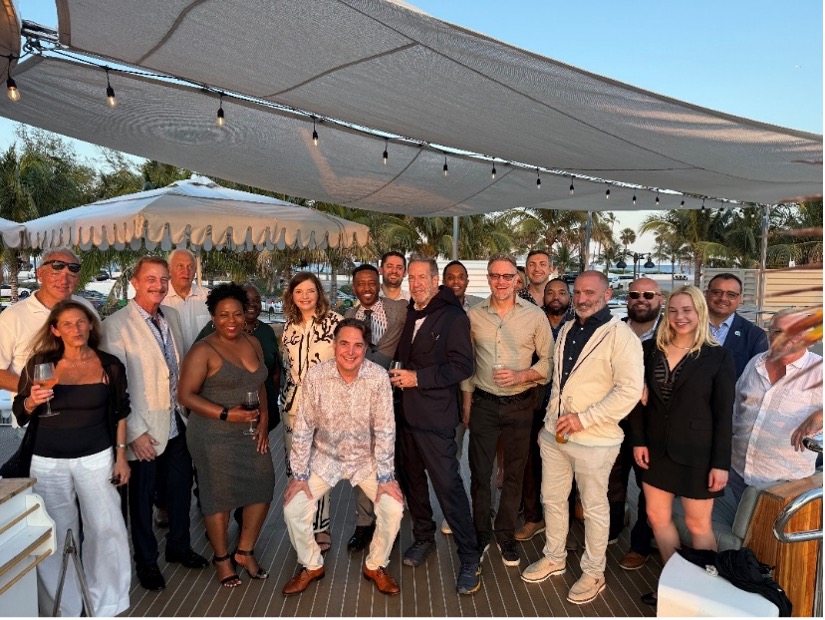
IATR regulators, CoMotion leadership, and private businesses representing all modes were present at the 2024 IATR dinner and gala reception at the Shorely in Fort Lauderdale, including Matt Daus, IATR President, center; John Rossant, Founder & CEO of CoMotion, to the right of Matt (in dark jacket); Sasha Ozeran of IATR; Michelle Jimerson, Palm Beach County Consumer Affairs Investigator; and Rick Versace, President of A1A Limo and President of the Florida Limousine Association, second to the left of Matt in the front row (in white jacket).
Ultimately, the future of urban mobility will likely not belong to a single mode of transportation, but rather to interconnected systems that better utilize every available corridor, from curb to coastline to airspace. As ferries, maritime freight systems, and advanced air mobility platforms continue moving closer to mainstream deployment, transportation leaders will increasingly face the challenge of ensuring innovation strengthens safety, sustainability, accessibility, and public trust while enhancing the broader mobility ecosystem rather than fragmenting it.