The Chauffeur Driven/NLA Show continues to be one of the industry’s premier conferences, bringing together operators, vendors, policymakers, and association leaders to discuss the trends shaping the future of mobility. At the 2026 Chauffeur Driven/NLA Show, held March 1-3 at the MGM Grand in Las Vegas, autonomous vehicles (AVs) were a major topic of conversation as technology companies, automakers, and transportation network companies (TNCs) continue investing billions of dollars into automated driving systems and artificial intelligence.
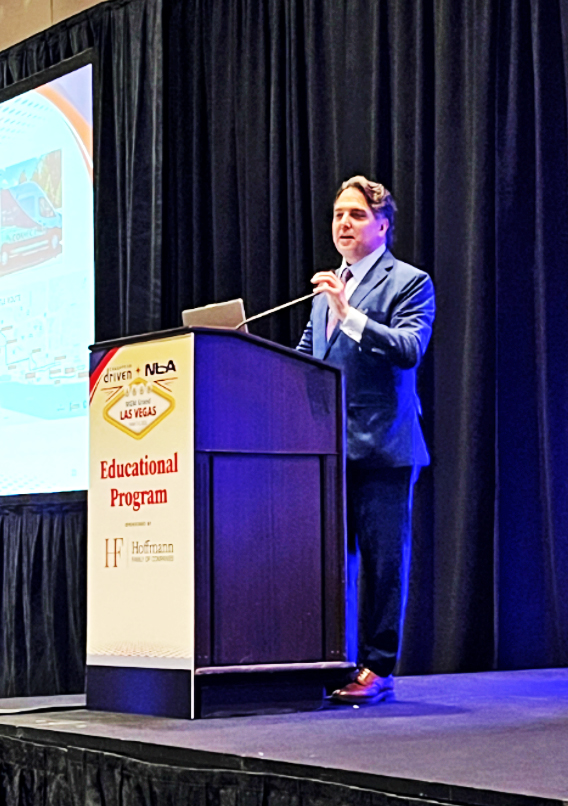
At this year’s show, I had the opportunity to participate in one of the conference’s most anticipated educational sessions, on March 1, focused on the future of autonomous vehicles and what their development could mean for limousine and black car operators. The session, titled “Autonomous Vehicles Are Coming – Navigating the Road Ahead,” addressed industry perspectives on the business, legal, and regulatory issues surrounding AV deployment. Addressing a packed room of operators and association leaders, I explored how autonomous vehicle technology is evolving, the practical implications it may have for the chauffeured transportation industry, and how legal and market headwinds may curtail expected growth.
During the session, I offered a grounded, policy-driven perspective on how AV deployment is likely to unfold in practice. While there are significant investments and technological progress in autonomous driving, I cautioned against the common narrative that AVs are poised to quickly replace existing transportation services.
Drawing from my published research through the Transportation Research Board, including “TCRP Legal Research Digest 59: Legal Issues and Emerging Technologies,” as well as findings from the Sixth EU-US Transportation Research Symposium on the socioeconomic impacts of automated and connected vehicles, I examined federal, state, and local regulatory authority, preemption risks, as well as liability allocation when automated systems, and insurance market implications replace human drivers. I encouraged fleet operators to understand AV technology and consider how it can enhance existing business lines rather than seeing it as a threat.
In reality, the pace and scale of AV integration will be shaped by regulatory oversight, insurance frameworks, labor considerations, and broader political dynamics. For limousine and black car operators, understanding these factors and monitoring the evolving policy landscape will be critical as the industry continues to evaluate how autonomous technology may intersect with traditional chauffeured transportation services in the years ahead.
The State of the AV Industry and Regulation
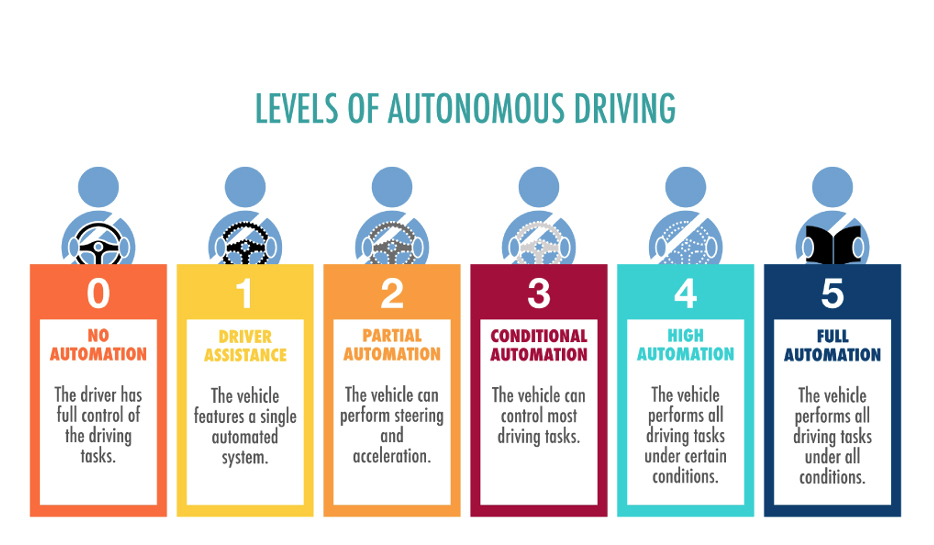
Autonomous vehicle technology is typically described using the SAE International levels of driving automation, which range from Level 0 to Level 5. At the lower end, Levels 1 and 2 include driver-assistance features such as adaptive cruise control and lane-keeping, where a human driver is responsible for monitoring the road. Level 3 automation allows the vehicle to handle certain driving tasks under specific conditions but still requires a human driver to intervene when requested. Level 4 systems, which are the focus of most current robotaxi deployments, can operate without human intervention within defined geographic areas or conditions, often referred to as geofenced environments. Level 5 automation refers to a fully driverless vehicle capable of operating anywhere under any conditions; this technology has not yet been commercially deployed.
The AV sector has moved beyond early experimentation and into a period of gradual commercial deployment. Companies such as Waymo and Zoox have begun operating robotaxi services in select markets (e.g., Zoox is free and operating in certain areas of Las Vegas), while other companies are conducting pilot programs in geofenced environments such as campuses, airports, and master-planned communities.
Las Vegas itself has become something of a testing ground for next-generation mobility systems. Nevada was the first state to authorize AV testing, and the region now hosts a range of connected infrastructure initiatives, intelligent transportation systems, and emerging mobility pilots. From a regulatory standpoint, however, the framework governing autonomous vehicles remains fragmented. In the United States, over two dozen states have enacted legislation allowing testing or deployment of AV technologies, but there is still no comprehensive federal statute governing the industry.
Federal oversight currently rests with the National Highway Traffic Safety Administration (NHTSA), which sets vehicle safety standards and investigates defects and crashes involving automated driving systems. Congress has periodically considered legislation to expand federal authority and establish clearer safety standards for automated driving systems. The SELF DRIVE Act was reintroduced on February 5, 2026, as H.R. 7390, updating earlier congressional efforts to create a national AV framework. The bill would amend federal law to strengthen NHTSA’s authority over vehicles equipped with automated driving systems (ADS), establish statutory definitions for terms such as ADS-equipped and ADS-dedicated vehicles, and direct the agency to develop or update federal safety standards governing the design, construction, and performance of ADS. It would also address testing and evaluation, cybersecurity protections for connected vehicles, and broader crash-data transparency, all while aiming to provide clearer federal rules for deployment and to support U.S. leadership in AV innovation.
At the agency level, the U.S. Department of Transportation and NHTSA have also taken some meaningful steps over the past year, even without a comprehensive federal statute in place. In April 2025, NHTSA issued a third amendment to its Standing General Order on crash reporting, continuing to require named manufacturers and operators to report certain crashes involving ADS and Level 2 ADS vehicles, but streamlining the system by preserving key notification elements, reducing redundant reporting, and adjusting reporting cadence based on lessons learned.
Around the same time, NHTSA also expanded its Automated Vehicle Exemption Program so that U.S.-built vehicles, not just imported ones, can seek exemptions for non-commercial research and demonstration purposes under 49 U.S.C. § 30114(a). The agency further noted that its separate Part 555 temporary exemption process remains available for broader uses, including potential commercialization, though that route involves a more extensive application process.
Separately, federal regulators signaled additional momentum on March 10, 2026, during the USDOT’s National AV Safety Forum, where NHTSA officials previewed several emerging policy initiatives. Among the most notable developments was the agency’s announcement that it is working toward the world’s first minimum performance standards for automated vehicle competency, an effort aimed at establishing objective safety benchmarks for AV systems within the Federal Motor Vehicle Safety Standards framework. NHTSA leadership also reiterated the agency’s intention to act as the “cop on the beat” for automated driving systems, emphasizing ongoing defect investigations, recalls, and crash oversight while simultaneously seeking to support innovation and deployment.

U.S. Transportation Secretary Sean Duffy
Officials outlined a federal approach built around three pillars:
- prioritizing the safety of AV operations on public roads
- removing unnecessary regulatory barriers to technological development
- enabling responsible commercial deployment to expand safety and accessibility benefits.
The forum also highlighted several near-term policy developments, including NHTSA’s request for public comment on Zoox’s exemption petition to deploy a purpose-built robotaxi without manual controls, as well as anticipated updates to federal motor vehicle safety standards to address vehicle design requirements in a driverless environment.
These developments suggest that federal policymakers are gradually moving toward a more structured national framework for autonomous vehicles. While Congress continues to debate broader legislation such as the SELF DRIVE Act, USDOT and NHTSA are advancing regulatory tools, from crash reporting requirements and exemption programs to potential performance standards for automated systems. As AV testing expands and commercial deployment grows, the federal role in shaping safety standards, oversight, and regulatory consistency will likely become increasingly significant.
AVs, Taxis, and Ridehail: Implications for the Industry
Several competing business models are beginning to emerge around AV deployment, many of which rely on partnerships between mobility platforms, vehicle manufacturers, and autonomous technology developers. Much of the current momentum around AV deployment is being driven by partnerships among mobility platforms, vehicle manufacturers, and autonomous technology developers. Uber, for example, has adopted a platform-based strategy, partnering with companies such as Waymo to make robotaxi services available through the Uber app in certain cities. Volkswagen is slated to deploy autonomous versions of its electric ID. There’s buzz around ride-hailing fleets, with Lucid Motors and Nuro exploring purpose-built robotaxi vehicles that combine Lucid’s EV platform with Nuro’s autonomous driving technology, and May Mobility planning to integrate autonomous vehicles into the Uber network in select markets.
Lyft is pursuing a different model, recently announcing a strategic partnership with Tensor, whose Level 4 “Robocar,” powered by NVIDIA computing systems, will be designed to be “Lyft-ready” directly from the factory, allowing owners to place their vehicles on the Lyft platform. Lyft has also indicated it may purchase hundreds of these vehicles for fleet operations. Meanwhile, Tesla, which is testing robotaxis in a few U.S. cities, has suggested that privately-owned Teslas could eventually augment a Tesla-operated robotaxi network when their owners are not using them.
These approaches illustrate the range of business models emerging in the AV space, from centralized robotaxi fleets to privately owned vehicles participating in ride-hail networks. Despite the growing number of partnerships and pilot programs, the path toward widespread deployment remains uncertain and will likely vary significantly across markets. Several factors could influence how quickly autonomous ride services expand, including regulatory oversight at the state and local level, the evolving insurance framework for automated driving systems, and broader workforce considerations. Labor organizations have already begun raising concerns about potential job displacement in several transportation sectors, while policymakers continue to examine safety oversight, liability allocation, and accessibility requirements.

Insurance frameworks for AVs also remain unsettled, as regulators and insurers continue to work through how liability should be allocated among drivers, vehicle owners, manufacturers, and automated driving systems. Compliance with the Americans with Disabilities Act (ADA) also poses operational challenges for driverless services, particularly regarding passenger assistance, vehicle accessibility, and service for riders with disabilities. These issues illustrate why AV adoption is likely to unfold gradually rather than through rapid, uniform replacement of existing transportation.
Potential Impacts on Limo and Black Car Operators
For the chauffeured transportation industry, the implications of AVs are still emerging. In the short term, one potential impact relates to independent contractor (IC) drivers who supplement their income through ridehail platforms. If AV services expand in certain markets, those supplemental opportunities could be affected. Drivers who rely on part-time ridehail work during slower periods may face reduced demand if automated fleets capture some of that volume. This dynamic could also influence affiliate networks and fleet management strategies. In theory, operators might eventually consider whether AVs could supplement or replace some independent contractor arrangements, although such decisions remain speculative as the technology and regulatory framework continue to evolve.
Another important consideration for operators is the cost of the vehicles themselves. Industry estimates suggest that Level 2 driver-assist technology can add roughly $1,000 to $5,000 to a vehicle, while more advanced Level 3 automation systems can add around $10,000. By comparison, fully autonomous Level 4 or Level 5 systems can add well over $100,000 to the cost of a vehicle, largely due to the sensors, computing hardware, and mapping systems required to operate without a driver. Ongoing operating costs are also higher than for traditional vehicles. Maintaining and updating autonomous systems – including sensor calibration, software updates, and system monitoring – can cost approximately $5,000 to $20,000 per vehicle annually, with additional expenses for cloud computing and data management to support AV operations.
At the same time, labor policy debates may shape how automation is ultimately deployed. Organized labor groups, including the Teamsters, have advocated for policies requiring a human operator or monitor to remain in AVs, even as automated driving systems advance. If such policies gain traction, the industry could see the emergence of hybrid workforce models, where a human employee remains in the vehicle as a concierge, safety monitor, or service attendant rather than serving primarily as the driver. In this scenario, the automated system would handle the driving task while the onboard worker focuses on passenger assistance, accessibility compliance, and service oversight, potentially preserving jobs while allowing operators to benefit from automation.
Beyond regulatory and labor requirements, many segments of the chauffeured transportation industry may continue to rely on a human presence as part of the service offering. High-end hospitality services, complex trip logistics, airport assistance, and personalized passenger experiences are core elements of the black car and limousine business model that autonomous systems alone may not replicate. Black car and limousine services may opt to have a human attendant or concierge in the vehicle to provide the high-touch service their customers expect, even if automated driving technology is performing the driving function itself.
Insurance and Technology Considerations
One area where operators may begin preparing today involves vehicle technology and insurance strategy. While fully autonomous vehicles remain limited in deployment, advanced ADS and partial automation technologies are becoming more common in new vehicles. Some operators may wish to monitor developments in Level 3 automation systems, which allow vehicles to handle certain driving tasks, while still requiring human oversight. Purchasing vehicles with evolving automation capabilities could provide flexibility as the technology matures.
In the U.S., Mercedes-Benz was poised to be the first manufacturer to offer a certified Level 3 system, known as Drive Pilot. Drive Pilot was to be offered in the S-Class and the electric-powered EQS, restricted to 40 mph and to Nevada and California only. However, the company decided to offer only level 2 automation for certain vehicles after reevaluating the complications in the U.S. regulatory environment.
Other widely available Level 2 systems are GM’s Super Cruise, Ford’s BlueCruise, and Tesla’s FSD (Supervised). Level 2 technologies still require driver supervision, but continuous software updates and sensor sophistication allow owners to benefit from incremental safety and convenience improvements. Operators that invest in these platforms can utilize a growing network of mapped highways and automated parking features while positioning themselves for future software-driven transitions toward higher autonomy.
Insurance considerations will also play an important role. As automated systems take on more driving functions, liability frameworks may gradually shift from traditional driver negligence models toward product liability and software-related risk allocation. This evolution could create challenges and opportunities for commercial fleet operators, particularly if automation technologies eventually reduce certain categories of accidents.
The insurance environment surrounding AVs, however, remains complex and unsettled. Policymakers, insurers, and manufacturers are still working through fundamental questions about responsibility and risk. This could also reduce investor interest at the fleet level if the vehicles cost more to insure and operate than human-driven vehicles.
Early Adoption and Industry Positioning
Despite uncertainties, AVs may not be viewed by some as a threat to the industry. Historically, transportation sectors that adapt early to technological change often find opportunities to grow alongside it. Operators who stay informed about regulatory developments, vehicle technologies, and emerging business models may be well-positioned to participate in new mobility ecosystems as they develop. That does not mean rushing into untested investments. Rather, it means learning about AVs, monitoring policy developments, understanding the costs of maintaining a fleet, and carefully evaluating opportunities as they arise.
The key takeaway from the Las Vegas session is that the industry remains in an information-gathering phase. AVs are advancing, but they are still subject to regulatory, legal, insurance, market, and operational constraints that will shape how quickly and in what form they ultimately scale.
Looking Ahead
As regulators, policymakers, and industry stakeholders continue to examine the implications of autonomous mobility, the chauffeured transportation sector must remain part of the conversation. The International Association of Transportation Regulators (IATR) is already addressing many of these issues through the publication of its Best Practices, Guiding Principles & Model Regulations for Robotaxis, developed by transportation regulators from around the world. The report provides a framework for jurisdictions overseeing autonomous ride services, covering key areas including safety oversight, permitting structures, data reporting, accessibility requirements, liability allocation, and workforce impacts.

Liability and workforce issues were central to my discussion in Las Vegas. As automated driving systems shift responsibility from human drivers to vehicle manufacturers, software developers, and fleet operators, regulators will need to establish clear insurance and liability frameworks to ensure accountability and consumer protection. At the same time, the report recognizes that AV deployment raises important workforce questions, particularly in sectors like taxis, ridehail, trucking, and chauffeured transportation, where policymakers must balance technological innovation with responsible workforce transition policies.
The IATR and similar industry associations and operators will continue evaluating how new technologies intersect with workforce issues, insurance markets, accessibility requirements, and passenger expectations. For now, the best approach may be the simplest one: stay informed, stay engaged, and stay tuned. The road toward autonomous mobility is still being mapped, and the limousine industry, like the broader transportation sector, will play a role in shaping how that journey unfolds.