Each year, road crashes result in approximately 1.35 million fatalities, 5 million serious injuries, and generate hundreds of billions of dollars in economic and medical costs. Against this backdrop, the New York International Auto Show was the perfect host for the World Traffic Safety Symposium, pairing cutting-edge vehicles with safety innovations.
The objective of promoting road safety, preventing fatalities, minimizing the consequences of crashes, and protecting against distracted or impaired driving is equally significant for individuals who appreciate automobiles as it is for those who choose to walk, cycle, or use alternative modes of transportation. This commitment to cultivating a culture of road safety transcends personal preferences and unites all stakeholders in prioritizing well-being on our roads.
On Thursday, April 2nd, the NY International Auto Show hosted its 35th World Traffic Safety Symposium with a kickoff welcome from Mark Schienberg, President of the Greater New York Automobile Dealers Association. He set the stage for the day, explaining why it is so important to focus on road safety as we look to the future of vehicle design and capabilities, and how dealerships are working to engage the public on how to purchase the safest vehicles.
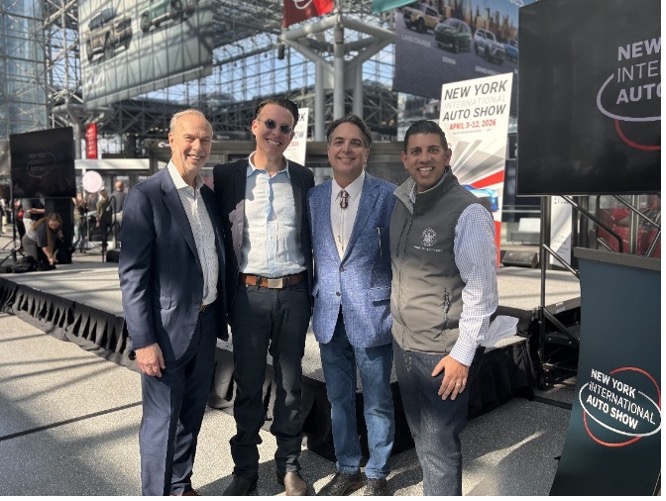
From Left: Mark Scheinberg, President of the Greater New York Automobile Dealers Association/New York Auto Show; Steve Gordon, Esq.; Matt Daus; and Jeremy Cooney, New York State Senator and Chair of the Senate Committee on Transportation
As the Honorable Jennifer Homendy, Chair of the National Transportation Safety Board (NTSB), started her keynote address, she reminded the audience of the 110 motor vehicle crash deaths per day in the United States, and that two people in the U.S. would die on our roads by the time she ended her keynote. She also highlighted the fact that while we often see her and other NTSB officials at bridge collapses, plane crashes, or train derailments, 95% of all deaths that occur from transportation in the U.S. annually are from automotive collisions.
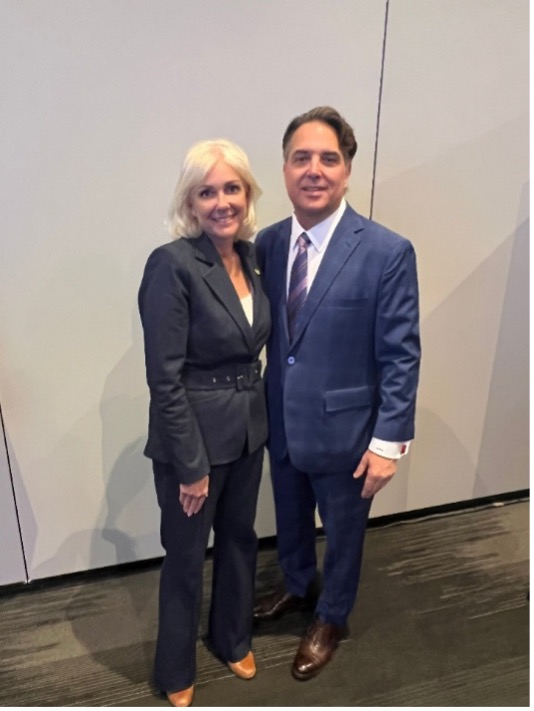
The NTSB Chair Jennifer Homendy and Matt Daus
The NTSB Chair cited several technologies that could make our roads safer, from intelligent speed assistance to automatic braking to alcohol impairment monitoring to distracted driving prevention tools, and how, sadly, alcohol use still accounts for over 10,000 road deaths per year in the United States. As part of her concluding remarks, she also reminded the audience that the new safety systems being placed on vehicles are vital to saving lives, but that drivers must be better versed in what these systems can and cannot do, citing two new investigatory findings from the NTSB on the use of Advanced Driver Assistance Systems (ADAS) and serious road crashes.
The keynote was followed by a panel led by John Bozzella, President & CEO of the Alliance for Automotive Innovation, and included NTSB Chair Homendy; Dr. Jeffrey Runge, former National Highway Traffic Safety Administration (NHTSA) Administrator; and Jonathan Adkins, CEO of the Governors Highway Safety Association.
Dr. Runge emphasized the collective responsibility of automotive safety, involving cooperation among vehicle manufacturers, auto dealers, government officials at all levels, and law enforcement agencies. He highlighted NHTSA’s “Click It or Ticket” initiative during his tenure, which helped increase national seatbelt usage from the mid-teens to approximately 80%. He noted that New York was the first state to enact Seat Belt Legislation in 1984 and presented a compelling statistic: over half of all fatalities caused by drunk drivers involve individuals operating vehicles at twice the legal intoxication limit. This prompted a discussion of regulatory challenges and mandates that inhibit the deployment and implementation of new technologies.
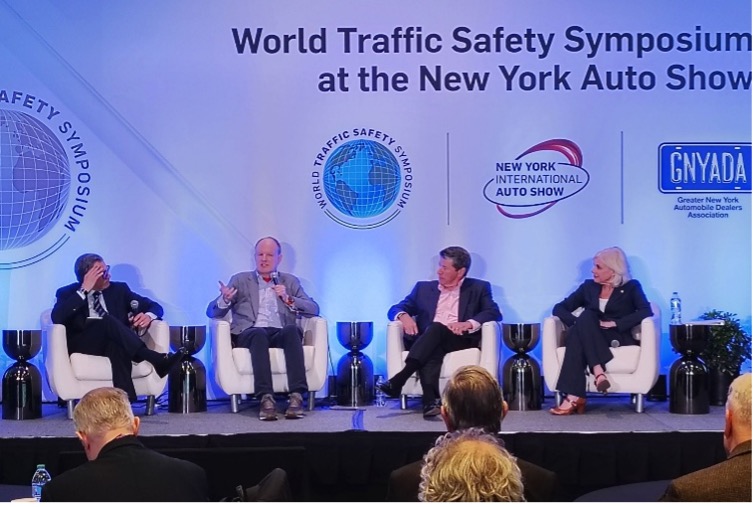
From Left: John Bozzella, President & CEO of the Alliance for Automotive Innovation; Jonathan Adkins, CEO of the Governors Highway Safety Association; Dr. Jeffrey Runge, former NHTSA Administrator; and NTSB Chair Jennifer Homendy
Adkins addressed the evolution of New York City’s roadways through the introduction of pedestrian plazas and bike lanes. He noted that these developments have contributed to a reduction in bicyclist fatalities and cited initiatives in New York and Hoboken as exemplary models for enhancing safety nationwide.
NTSB Chair Homendy facilitated a discussion on the importance of educating school-aged children about driving, regulations, technology, and practical solutions, examining whether these elements can coexist to effectively prevent deaths and serious injuries on roadways, or whether prioritization is required. The panel further considered the application of automated enforcement technologies to safeguard neighborhoods from reckless driving, emphasizing the necessity of ongoing collaboration with law enforcement agencies.
Mark Schroeder, Commissioner of the NYS Department of Motor Vehicles and Chair of the Governor’s Traffic Safety Committee, then took the stage to a room full of applause as recognition of all his work on road safety, improving the DMV process at all levels in New York State, and being both a regulator and partner for the New York auto industry.
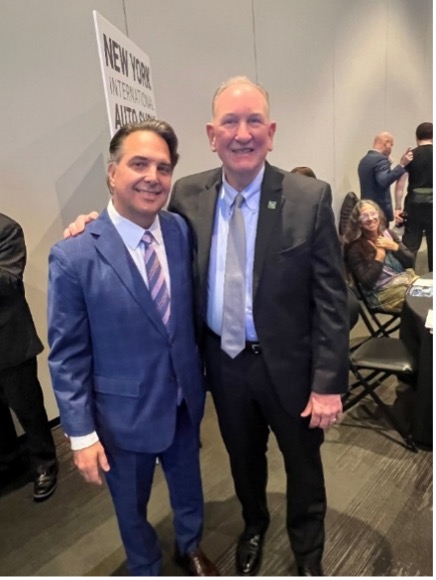
Matt Daus and Mark Schroeder, Commissioner of the NYS Department of Motor Vehicles and Chair of the Governor’s Traffic Safety Committee
Schroeder recalled some of the work that he has led, including a multimillion-dollar project to replace hundreds of outdated computer systems, the expansion of data lines, the creation of a DMV transparency portal, OpenData NY datasets that include information about its registration transactions, vehicle and driver records, and service locations, the migration of over 30 million records into one system, and the significant increase in online transaction offerings. This work was undertaken to reduce wait times at DMV offices and to help car dealers conduct DMV transactions at dealerships, which now exceed 1 million per year.
He also covered some of the work that, as both DMV Chair and the Chair of the Governors Traffic Safety Committee, he has spearheaded to make roads safer across New York, including closely working with the New York City Vision Zero Task Force on local and statewide projects, increasing fines for serious traffic violations, and a long-standing partnership with NASCAR and driver Ross Chastain on the “Protect Your Melon” campaign working with school aged children on the importance of seat belt use in all seats at all times. Schroeder is set to retire from the DMV at the end of April 2026, marking the close of a significant tenure and the start of his next chapter.
I then joined David Ullman, New York State’s Deputy Secretary for Transportation, for a fireside chat on how the State, under Governor Hochul, is rethinking road safety. We covered the push to shift passenger and freight travel to transit, waterways, and micromobility; the real-world and legal success of congestion pricing; and the continued testing of vehicle automation.
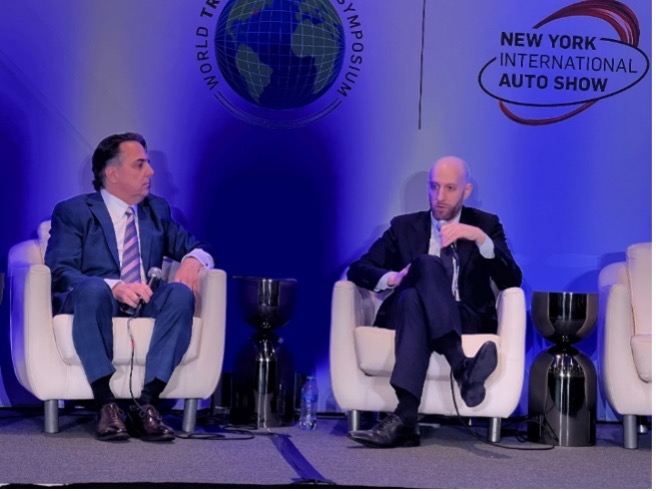
Matt Daus and David Ullman, NYS Deputy Secretary for Transportation
We discussed the passage of Sammy’s Law (NY legislation authorizing NYC to lower default speed limits below 25 mph) and the anticipation that the new NYC Mayoral administration will use this to further reduce City speed limits. The conversation also covered the renewal and expansion of automated enforcement programs, including red-light and speed cameras, as well as work-zone speed enforcement. Ullman highlighted the NYC Department of Citywide Administrative Services (DCAS) for its leadership on intelligent speed assistance, noting that these efforts – along with sustained advocacy from groups like Families for Safe Streets – helped drive inclusion of the “Stop Super Speeders” Law in the Governor’s executive budget.
Following the fireside chat, I moderated a discussion that included Peter Goldwasser, Executive Director of Together for Safer Roads (TSR); Jim Neumann, Principal Owner of TrueDNA; and Ryan Naru, Aviation Policy and Regulatory Affairs Lead at Joby.
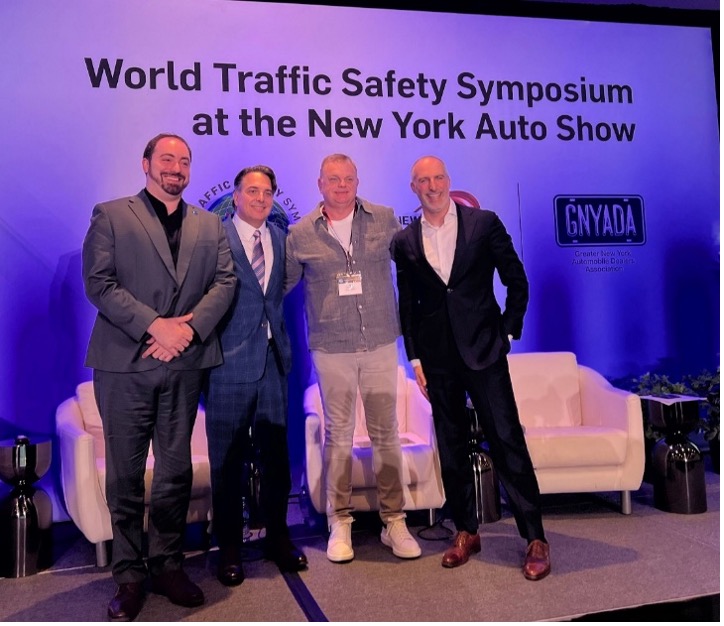
Ryan Naru, Aviation Policy and Regulatory Affairs Lead at Joby; Matt Daus; Jim Neumann, Principal Owner of TrueDNA; and Peter Goldwasser, TSR Executive Director
Goldwasser began the panel by describing how TSR convenes large businesses, public agencies, nonprofits, and technology companies to share best practices, pilot technologies, and strengthen training for organizations, managers, and drivers in road safety. He also highlighted the Cab for All initiative, through which TSR partners with major fleet operators, truck manufacturers, the National Waste & Recycling Association (NWRA), and Women in Waste to evaluate and improve truck designs that have historically been built around male body types.
Neumann discussed the crucial role of vehicle leasing, rental, and remarketing in the transportation system. Unfortunately, important repair and maintenance records, including safety recalls, usage details, and collision reports, often do not remain with vehicles when they are resold. TrueDNA addresses this issue by promoting driver engagement: it collaborates with dealers and repair shops and offers incentives, such as Apple and Google Wallet cash payments, to encourage completion of repairs, maintenance, recall compliance, tire changes, and more. The platform then consolidates all completed work into a single record. For dealers in secondary markets, this improved data collection boosts vehicle residual values, enhances marketing strategies, and ensures customers have access to accurate safety records for the vehicles they purchase.
Naru shifted the discussion to aviation, highlighting the potential to transform short, often solo and stressful trips into shared, all-electric journeys that are quiet and free of traffic congestion. He provided insights into the design of the Joby aircraft, emphasizing features that facilitate easier maintenance, faster turnaround times, and sustainable operations. He also made the case for balanced regulation by keeping safety front and center, without letting regulation for regulation’s sake slow innovation.
Richard Simon, former NHTSA Regional Administrator, concluded the speaking program by moderating a panel on the impact of education and legislation on road safety. Panelists included Sangeeta Badlani, founder of the Nikhil Badlani Foundation; Kim Wiley-Schwartz, Assistant Commissioner at the NYC Department of Transportation; and Shani Jarvis, Manager of Public Affairs Content and Design at AAA Northeast. The panel addressed the evolving nature of public education and advocacy within a technologically advanced context. The discussion emphasized that, while education remains essential, strategies for educating the public must adapt. Traditional methods, like disseminating general information to large audiences, are no longer effective. Instead, success requires understanding the target audience through improved data analysis, selecting the right messages, messengers, and media, and fostering engagement rather than one-way communication.
Badlani shared her story of loss on our roads. On June 11, 2011, her son Nikhil Badlani, an 11-year-old sixth grader, was riding in the family car when it was hit by a distracted driver who failed to stop at an intersection. As so many families impacted by road violence do, Badlani has been working tirelessly to change distracted driving laws, teach young people about the dangers of not keeping their eyes on the road when driving, and encourage the development and use of technology to end distracted driving.
While emerging technologies like intelligent speed assistance, automatic braking, and anti-drunk-driving systems can improve road safety, community and driver training awareness programs can also help, if coordinated with automated and in-person enforcement initiatives. With new modes of transportation like electric ferries, flying taxis, micromobility systems, and delivery hubs, we have an opportunity to make our roads safer for all. By combining regulation, training, safer vehicles, and a Safe System approach to road safety, we can reduce fatalities and serious injuries on our roads while still loving the cars on display at the New York International Auto Show.
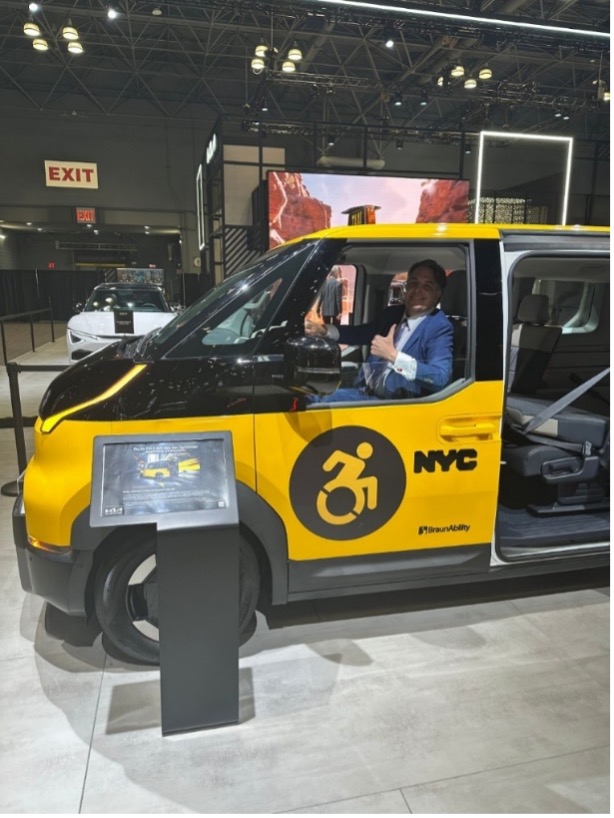
Matt Daus inside the new Kia PV5 WAV
Beyond the symposium programming, the show floor itself highlighted where the industry is heading, particularly on accessibility and electrification. A standout was Kia’s PV5 WAV New York Taxi and Rideshare concept, developed in partnership with BraunAbility. Built on a dedicated electric platform designed for real-world conversions, the vehicle reflects a growing focus on scalable, ADA-compliant mobility solutions. Features like a low step-in height, integrated securement systems, and purpose-built design for wheelchair users underscore a shift toward more inclusive vehicle design.
Just as notable was the strong presence of city and state agencies showcasing their own progress toward fleet electrification and public engagement. New York City agencies, including the Department of Citywide Administrative Services (DCAS), Taxi & Limousine Commission (TLC), NYPD, Department of Correction, Parks Department, and Department of Sanitation, featured electric vehicles and outreach initiatives. At the show, the City also marked a major milestone with the deployment of its 1,000th law enforcement electric vehicle, part of a broader fleet that now includes thousands of electric and hybrid units. The TLC’s Van Hailin’ mobile outreach unit, an electric, fully equipped office-on-wheels, demonstrated how agencies are improving service delivery by meeting drivers where they are, offering licensing support, compliance assistance, and on-site services across all five boroughs. The MTA displayed an all-electric bus alongside a historic vehicle from its museum collection, while the NYPD offered a retrospective of vehicles spanning several decades. State agencies were also well represented, with the New York State DMV providing on-site REAL ID services and license renewals, and the State Police, Court System, and Department of Corrections participating in recruitment and showcasing electric fleet investments.
The exhibit also offered a reminder that many of today’s conversations around accessibility, design, and the future of the taxi industry are not entirely new. In 2007, when Matt Daus was serving as Commissioner and Chair of the NYC TLC, the Design Trust for Public Space launched the “Taxi 07” initiative to reimagine the taxi and broader taxi system for the 21st century. Debuting at the New York International Auto Show that year, the exhibit featured eight full-scale taxi prototypes and system-wide innovations developed by leading design firms and manufacturers, with a focus on passenger comfort, driver needs, safety, accessibility, and cleaner propulsion technologies. Design concepts included improved roof lighting, enhanced partitions with passenger services, integrated child seating, hybrid powertrains, and wheelchair accessibility. Drawing more than 100,000 visitors over 12 days, the exhibit demonstrated the taxi’s enduring role as both a practical mobility solution and a global symbol of New York City. The initiative ultimately helped catalyze the Taxi of Tomorrow competition, which led to the development of the Nissan NV200 as a purpose-built taxi vehicle.
This year’s Auto Show and World Traffic Safety Symposium underscored how far the industry has come and how much work remains. From advancements in vehicle technology and automation to renewed focus on enforcement, education, and system design, the path to safer streets will require sustained collaboration across the public and private sectors. As new modes and innovations continue to emerge, the challenge for policymakers, regulators, and industry leaders alike will be to strike the right balance – leveraging technology to save lives while ensuring that safety, accessibility, and equity remain at the center of our transportation system.